←Collard GreensKale→
Plant-BasedVegetables
🟢Safe

Fiddlehead Ferns

Matteuccia struthiopteris

Facts

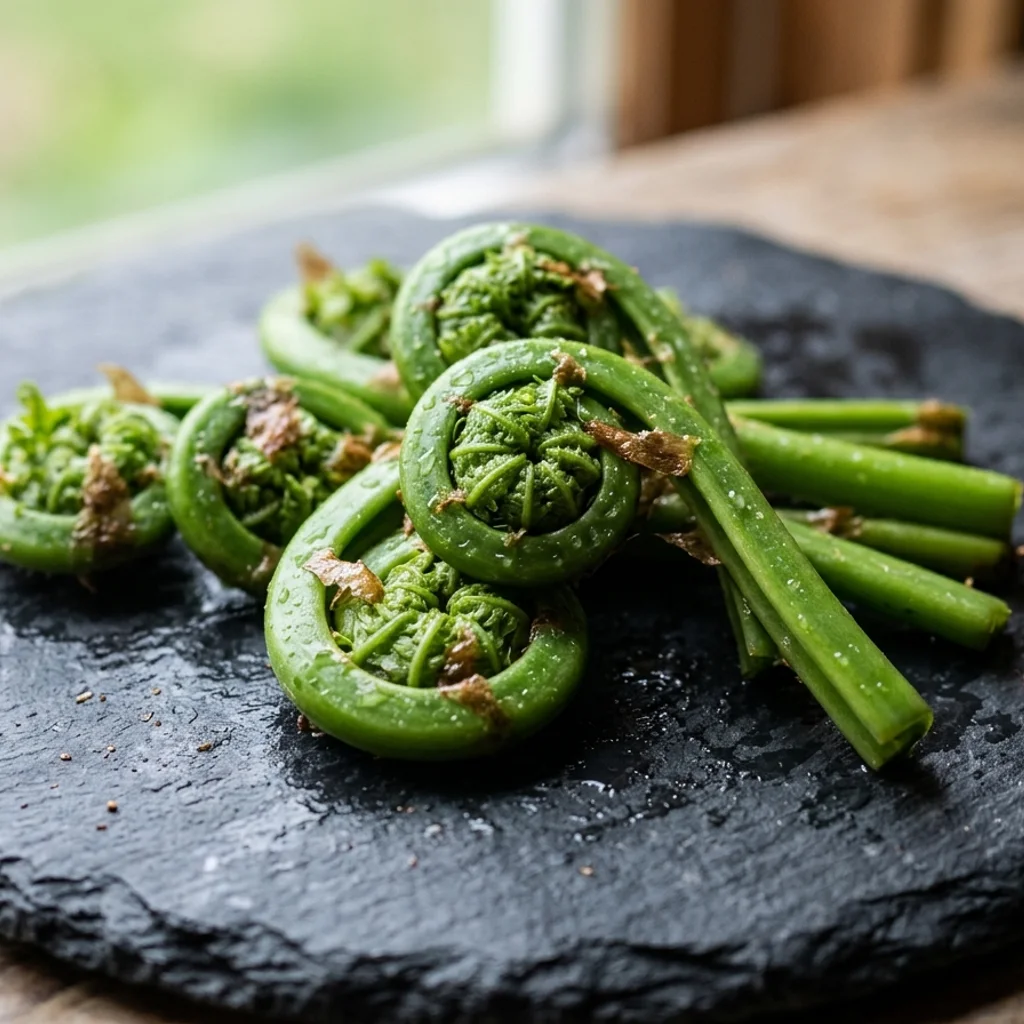
Fiddlehead Ferns is a leafy green vegetable, known for its fresh and earthy flavor profile, and rich in essential nutrients like Vitamin C, Vitamin K, Vitamin A.

Regional names

Fiddlehead Ferns

Origin

Fiddlehead Ferns is cataloged inside the leafy greens lane of vegetables.

Native region

Cultivated globally across seasonal farming systems

Season

Highly seasonal by crop, with some year-round supply
Food Combinations & Timing

✅

Safe Combination Profile

It is safe to eat this food item with other food items.

Nutritional profile

Calories

22 kcal / 100 g

Protein

2.2 g

Carbs

3.2 g

Fat

0.3 g

Fiber

2.4 g

Water content

Very high (90% to 93%)

Glycemic index

Low

Vitamins

  • Vitamin C
  • Vitamin K
  • Vitamin A

Minerals

  • Potassium
  • Folate
  • Calcium

Health benefits

Evidence-aligned highlights

  • Fiddlehead Ferns is grouped with leafy greens ingredients that commonly contribute flavor, cooking flexibility, and category-specific nutrient value.
  • Fiddlehead Ferns can be compared against other vegetables items using the same EatPedia detail layout.
  • Fiddlehead Ferns is ready for future USDA and editorial enrichment while already carrying a structured safety and preparation profile.

Flavor notes

Fresh, Earthy, Leafy greens

Texture

Ranges from crisp and watery to dense and starchy depending on the vegetable type.

Aroma

Leafy greens aroma varies by variety, freshness, and preparation.

Pairings

Garlic, Olive oil, Lemon, Beans, Herbs

Safety & toxicity

Edible parts

Standard edible culinary portions of fiddlehead ferns

Toxic or risky parts

Discard damaged, spoiled, or non-food-grade forms of fiddlehead ferns

Raw vs cooked

Use leafy greens items according to the ingredient's normal culinary form, whether raw, cooked, dried, soaked, or preserved.

Allergies & intolerances

People with known sensitivities to vegetables items should confirm tolerance before larger servings.

Drug interactions

Leafy or mineral-dense vegetables can matter for medication consistency depending on the specific item and clinical advice.

Safe daily limit

Typical meal-sized servings of vegetables items are appropriate for most adults when tolerated.

⚠️ Notice: This safety profile is a general guideline. Dietary tolerances differ; consult a healthcare professional for allergies or drug interactions. See our full disclaimer.

Who should avoid & how to handle it

Who should avoid or moderate

  • People with allergies, sensitivities, or medically restricted diets related to leafy greens items should review tolerance carefully.

Preparation & storage

  • Clean: Wash, sort, or inspect fiddlehead ferns according to its usual market form before use.
  • Cut: Cut, peel, grind, or portion fiddlehead ferns according to the intended recipe and texture target.
  • Cook: Saute, roast, steam, braise, or serve leafy greens vegetables raw depending on structure and flavor.
  • Store: Keep chilled and dry unless the specific item stores better in a cool pantry.
  • Preserve: Freeze, dry, ferment, or pantry-store fiddlehead ferns according to the form you buy and how quickly you plan to use it.

Cuisine & cultural use

Common cuisines

  • Global home cooking
  • Soups
  • Roasts
  • Salads

Fiddlehead Ferns appears in Global home cooking, Soups, Roasts, Salads, often because its flavor structure and prep speed fit both everyday cooking and ceremonial dishes.

Dynamic Substitutions

No alternatives recorded for this specific item. It is chemically or botanically unique in the database.

🌱 Cultivation & Production

Fiddlehead Ferns Home Growing Guide

Learn how to grow and cultivate fiddlehead ferns at home, whether you live in an urban apartment or have access to outdoor garden land.

Apartment Friendly

✓ Highly Recommended

Yes

Urban Space Advice

Highly suited for balcony planters or wide pots at least 6-8 inches deep.

Difficulty

Easy

Propagation

Seeds

Soil Type

Loose, nutrient-rich soil with good drainage

Watering

Regular (keep soil consistently moist)

Sunlight

Partial sun or bright indirect light (4 hours daily)

Best Season

Cooler seasons (Spring or Autumn)

Step-by-Step Growing Guide

  1. 1

    Sow seeds thinly across a wide, shallow balcony container.

  2. 2

    Cover lightly with 1/8 inch of compost and mist thoroughly.

  3. 3

    Keep in a bright, cool spot; thin seedlings early to about 3 inches apart.

  4. 4

    Harvest outer leaves continuously once they reach 4 inches tall so the plant keeps producing.

Quick recipes

Fast recipes using Fiddlehead Ferns

Dinner

Pan-Roasted Brown Butter Fiddleheads

☆Sign in to save

Blanched fiddlehead ferns crisped in nutty brown butter with garlic and lemon.

Ingredients

Servings:2
  • 2 cups fresh ostrich fern fiddleheads, cleaned with brown chaff removed
  • 2 tbsp unsalted butter
  • 2 cloves garlic, thinly sliced
  • 1 tbsp freshly squeezed lemon juice
  • 1/2 tsp flaky sea salt
  • Water for boiling

Nutrition

  • 110 kcal
  • 4 g protein
  • 6 g carbs
  • 8 g fat

Preparation Steps

  1. 1Bring a pot of salted water to a rolling boil; add cleaned fiddleheads and boil vigorously for 10 minutes to ensure full thermal safety.
  2. 2Drain immediately and plunge into cold water to preserve the bright emerald color, then pat dry thoroughly.
  3. 3Melt butter in a skillet over medium heat until foaming and golden brown with a nutty aroma (3 minutes).
  4. 4Add garlic and blanched fiddleheads, tossing over medium-high heat for 5 minutes until edges are crisp and tender.
  5. 5Finish with fresh lemon juice and sea salt before serving hot.