Jerusalem ArtichokeSweet Potato
Plant-BasedVegetables
🟢Safe

Potato

Potato (Tubers variety)

Facts

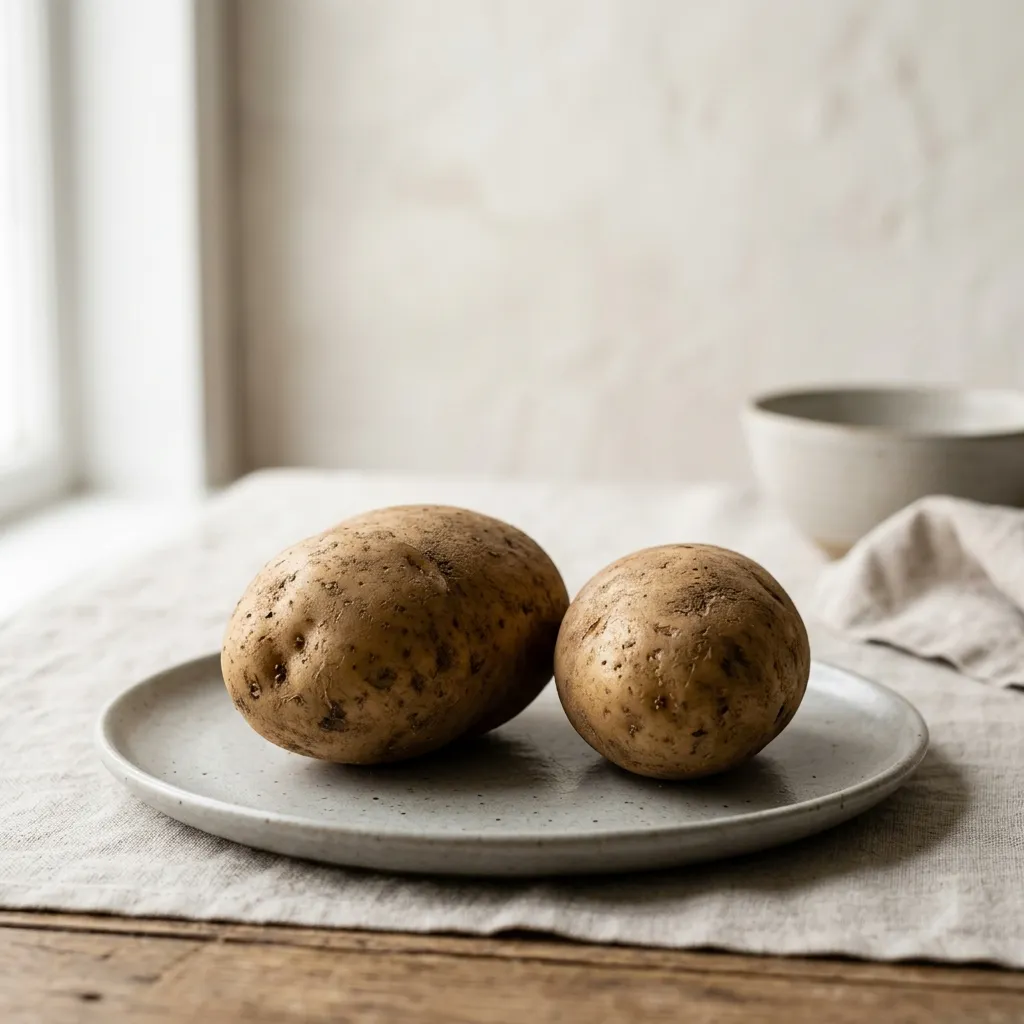
Potato is a starchy tuber vegetable, serving as a global staple crop due to its dense energy, minerals, and filling starch.

Regional names

Potato

Origin

Potato has been bred globally for crop density, edible leaves, roots, and pods, anchoring agriculture across continents.

Native region

South American Andes, tropical Asia, and West Africa

Season

Highly seasonal by crop, with some year-round supply
Food Combinations & Timing

Safe Combination Profile

It is safe to eat this food item with other food items.

Nutritional profile

Calories

77 kcal / 100 g

Protein

2.0 g

Carbs

17.5 g

Fat

0.1 g

Fiber

2.2 g

Water content

High (85% to 95%)

Glycemic index

Moderate to high

Vitamins

  • Vitamin C
  • Vitamin K
  • Vitamin A

Minerals

  • Potassium
  • Folate
  • Calcium

Health benefits

Evidence-aligned highlights

  • Excellent source of complex carbohydrates, providing steady, sustained energy.
  • Provides a rich supply of potassium to support normal cardiovascular pressure.
  • Contains resistant starch (especially when cooled after cooking), which acts as a gut prebiotic.

Flavor notes

Starchy, Earthy, Sweet, Mild

Texture

Dry, floury, waxy, or creamy when cooked

Aroma

Earthy and warm

Pairings

Butter, Rosemary, Garlic, Salt, Olive oil, Chives, Black pepper

Safety & toxicity

Edible parts

Flesh, Peel (if scrubbed and cooked)

Toxic or risky parts

Green skins or sprouts (contain toxic solanine; cut away completely before cooking)

Raw vs cooked

Must be thoroughly cooked to break down raw starches and neutralize mild anti-nutrients.

Allergies & intolerances

Allergies are extremely rare.

Drug interactions

No major interactions for normal portions.

Safe daily limit

1 to 2 servings daily, balancing with physical activity levels.

⚠️ Notice: This safety profile is a general guideline. Dietary tolerances differ; consult a healthcare professional for allergies or drug interactions. See our full disclaimer.

Who should avoid & how to handle it

Who should avoid or moderate

  • Individuals managing blood glucose may monitor glycemic loads of white tubers, balancing with protein/fats.

Preparation & storage

  • Clean: Scrub thoroughly with a vegetable brush under cold water to remove caked soil.
  • Cut: Peel skin if desired; dice, slice, or cut into fries.
  • Cook: Boil, bake, steam, or roast until a fork slides easily through the center.
  • Store: Store in a cool, dark, dry, well-ventilated pantry; do not refrigerate raw tubers as cold turns starch to sugar.
  • Preserve: Par-cook slices and freeze, or dry into tuber flour.

Cuisine & cultural use

Common cuisines

  • Global savory cooking
  • Soups, stews, and roasted sides

Potato appears in Global savory cooking, Soups, stews, and roasted sides, often because its flavor structure and prep speed fit both everyday cooking and ceremonial dishes.

Dynamic Substitutions

No alternatives recorded for this specific item. It is chemically or botanically unique in the database.

🌱 Cultivation & Production

Potato Home Growing Guide

Learn how to grow and cultivate potato at home, whether you live in an urban apartment or have access to outdoor garden land.

Apartment Friendly

✓ Highly Recommended

Yes

Urban Space Advice

Can be grown successfully in deep grow bags (at least 12 inches deep) on balconies.

Difficulty

Medium

Propagation

Sprouted seed potatoes or slips

Soil Type

Loose, stone-free sandy soil to prevent root malformation

Watering

Consistent (moist soil promotes uniform roots and sweet flavor)

Sunlight

Full sun to partial shade (5-6 hours daily)

Best Season

Early Spring or early Autumn

Step-by-Step Growing Guide

  1. 1

    Choose a grow bag or container at least 12 inches deep with excellent drainage.

  2. 2

    Sow seeds directly (or plant sprouted potato chunks 4 inches deep).

  3. 3

    Keep the soil evenly moist and thin seedlings early to give them space to swell.

  4. 4

    Harvest when the root crowns emerge from the soil or the leaves begin to yellow.

Quick recipes

Fast recipes using Potato

Side

Quick Potato Podimas

Sign in to save

Tempered boiled potatoes crumbled and sautéed with mustard seeds, onions, and garlic.

Ingredients

Servings:2
  • 2 medium potatoes, boiled and peeled
  • 1/2 onion, finely chopped
  • 2 garlic cloves, minced
  • 1 tbsp cooking oil
  • 1/2 tsp mustard seeds

Nutrition

  • 190 kcal
  • 3 g protein
  • 32 g carbs
  • 6 g fat

Preparation Steps

  1. 1Roughly crumble the boiled potatoes with your hands.
  2. 2Heat oil in a pan, fry mustard seeds until they pop, then sauté onions and garlic for 5 minutes.
  3. 3Add crumbled potatoes, pinch of turmeric and salt, and stir fry for 5 minutes until warm and well combined.

Lunch

Aloo Pyaz Sabji

Sign in to save

Quick dry potato and onion stir fry seasoned with turmeric and cumin seeds.

Ingredients

Servings:2
  • 2 medium potatoes, diced small
  • 1 small onion, chopped
  • 1 garlic clove, minced
  • 1 1/2 tbsp oil
  • 1/2 tsp cumin seeds

Nutrition

  • 210 kcal
  • 3 g protein
  • 34 g carbs
  • 8 g fat

Preparation Steps

  1. 1Heat oil in a pan, toast cumin seeds, and sauté onions and garlic for 3 minutes.
  2. 2Add the diced potatoes, turmeric, salt, and cover with a lid.
  3. 3Cook on medium-low heat for 15 minutes, stirring occasionally, until potatoes are tender.

Lunch

Stovetop Aloo Gobi Sabji

Sign in to save

A classic dry curry of potatoes and cauliflower florets seasoned with ginger and garlic.

Ingredients

Servings:2
  • 2 medium potatoes, diced
  • 1 1/2 cups cauliflower florets
  • 1/2 onion, chopped
  • 2 garlic cloves, minced
  • 1 1/2 tbsp oil
  • 1/2 tsp turmeric powder

Nutrition

  • 220 kcal
  • 5 g protein
  • 38 g carbs
  • 7 g fat

Preparation Steps

  1. 1Heat oil in a wide pan and cook chopped onions and garlic for 5 minutes.
  2. 2Add potatoes, cauliflower florets, turmeric, and salt. Stir to coat with oil.
  3. 3Cover tightly and cook on low heat for 25 minutes, stirring occasionally, until tender.