
←ScallopsSnails (Escargot)→
Animal-BasedSeafood — Shellfish & Crustaceans
🟡Caution

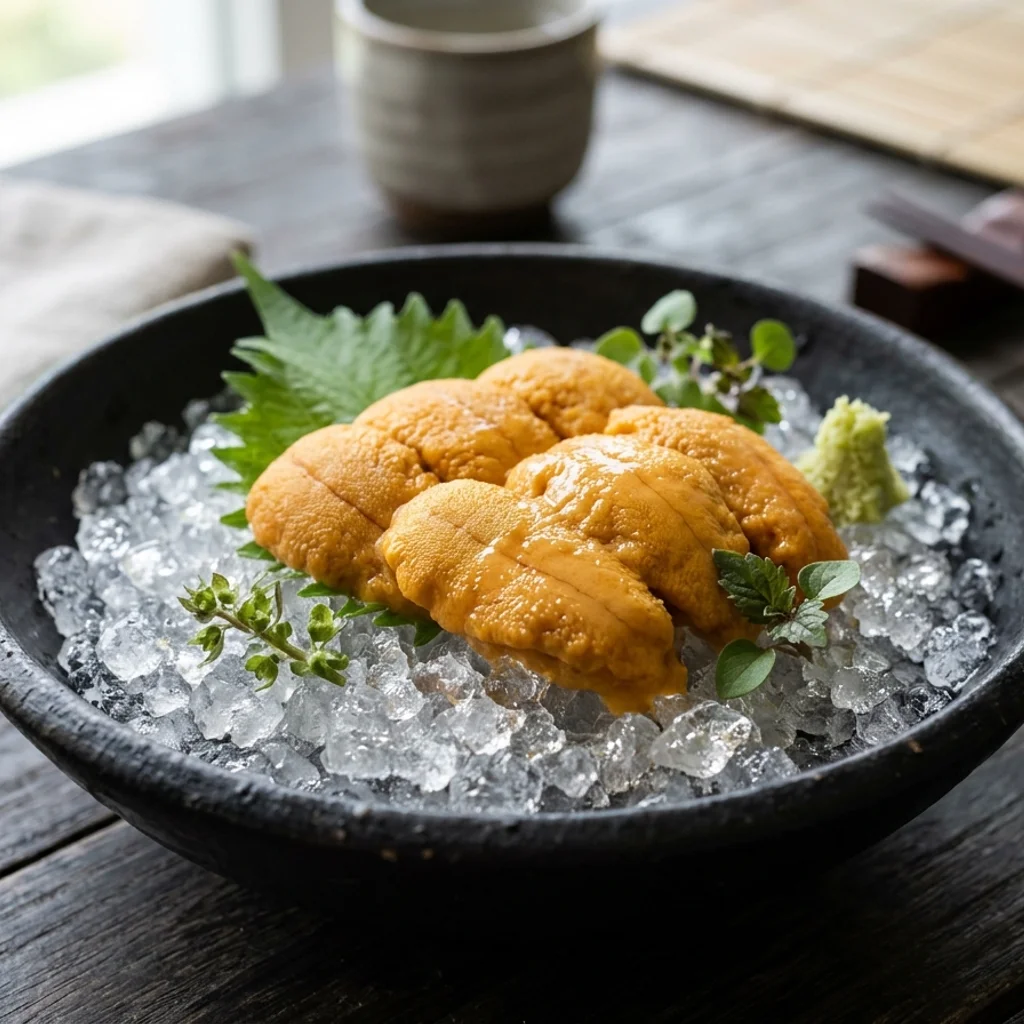
Sea Urchin

Strongylocentrotus purpuratus

Sea Urchin is a mollusks shellfish, known for its mollusks and savory flavor profile, and rich in essential nutrients like Vitamin B12, Riboflavin, Niacin.

Regional names

Sea Urchin

Origin

Sea Urchin is cataloged inside the mollusks lane of seafood — shellfish & crustaceans.

Native region

Global food production systems

Season

Available year-round depending on form, preservation, or sourcing
Food Combinations & Timing

✅

Safe Combination Profile

It is safe to eat this food item with other food items.

Nutritional profile

Calories

76 kcal / 100 g

Protein

11.4 g

Carbs

2.8 g

Fat

1.4 g

Fiber

0 g

Water content

High (75% to 80%)

Glycemic index

0

Vitamins

  • Vitamin B12
  • Riboflavin
  • Niacin

Minerals

  • Zinc
  • Copper
  • Selenium
  • Iron
  • Sodium

Health benefits

Evidence-aligned highlights

  • Sea Urchin is grouped with mollusks ingredients that commonly contribute flavor, cooking flexibility, and category-specific nutrient value.
  • Sea Urchin can be compared against other seafood — shellfish & crustaceans items using the same EatPedia detail layout.
  • Sea Urchin is ready for future USDA and editorial enrichment while already carrying a structured safety and preparation profile.

Flavor notes

Mollusks, Savory, Balanced

Texture

Texture varies across mollusks items and how they are prepared.

Aroma

Mollusks aroma varies by variety, freshness, and preparation.

Pairings

Mollusks, Pantry staples, Fresh herbs

Safety & toxicity

Edible parts

Standard edible culinary portions of sea urchin

Toxic or risky parts

Discard damaged, spoiled, or non-food-grade forms of sea urchin

Raw vs cooked

Use mollusks items according to the ingredient's normal culinary form, whether raw, cooked, dried, soaked, or preserved.

Allergies & intolerances

People with known sensitivities to seafood — shellfish & crustaceans items should confirm tolerance before larger servings.

Drug interactions

Normal culinary servings of seafood — shellfish & crustaceans items usually fit routine diets, but concentrated use can change tolerance or medication timing.

Safe daily limit

Typical meal-sized servings of seafood — shellfish & crustaceans items are appropriate for most adults when tolerated.

⚠️ Notice: This safety profile is a general guideline. Dietary tolerances differ; consult a healthcare professional for allergies or drug interactions. See our full disclaimer.

Who should avoid & how to handle it

Who should avoid or moderate

  • People with allergies, sensitivities, or medically restricted diets related to mollusks items should review tolerance carefully.

Preparation & storage

  • Clean: Wash, sort, or inspect sea urchin according to its usual market form before use.
  • Cut: Cut, peel, grind, or portion sea urchin according to the intended recipe and texture target.
  • Cook: Prepare mollusks items using the method that best suits their usual culinary form and texture.
  • Store: Store in the usual food-safe way for the product form you buy: fresh, dried, fermented, or shelf-stable.
  • Preserve: Freeze, dry, ferment, or pantry-store sea urchin according to the form you buy and how quickly you plan to use it.

Cuisine & cultural use

Common cuisines

  • Global cooking

Sea Urchin appears in Global cooking, often because its flavor structure and prep speed fit both everyday cooking and ceremonial dishes.

Dynamic Substitutions

No alternatives recorded for this specific item. It is chemically or botanically unique in the database.

🌱 Cultivation & Production

Sea Urchin Production Profile

Discover how sea urchin is obtained, produced, and how you can craft or prepare it in your own kitchen.

Apartment Friendly

✗ Not Ideal for Apartments

No

Urban Space Advice

Cannot be grown or raised in a standard residential apartment. Requires livestock farming or professional marine harvesting.

Source Material

Wild marine capture or aquaculture farming

Primary Method

Sustainable fishing and aquaculture

Homemade Production Method

  1. 1

    Choose high-quality fish from a sustainable, trusted source.

  2. 2

    Store fresh fish wrapped tightly in the coldest part of the refrigerator, on a bed of ice, for up to 2 days.

  3. 3

    Prepare safely by baking, grilling, or steaming to an internal temperature of 145°F (63°C).

Quick recipes

Fast recipes using Sea Urchin

Snack

Uni Butter Crostini

☆Sign in to save

Rich sea urchin whipped with cultured butter and spread on crisp toasted baguette.

Ingredients

Servings:2
  • 6 fresh sea urchin tongues (uni)
  • 3 tbsp unsalted butter, softened to room temperature
  • 8 thin slices French baguette
  • 1 tbsp minced fresh chives
  • Flaky sea salt to taste

Nutrition

  • 145 kcal
  • 4 g protein
  • 14 g carbs
  • 8 g fat

Preparation Steps

  1. 1Toast the baguette slices in a dry skillet over medium heat until golden and crisp.
  2. 2Gently mash 3 pieces of sea urchin with the softened butter and a tiny pinch of sea salt until uniform.
  3. 3Spread the uni butter generously across the warm toasts.
  4. 4Top each crostini with a piece of whole fresh uni and garnish with snipped fresh chives.