
SapodillaAçai
Plant-BasedFruits
🟢Safe

Tamarind

Tamarindus indica

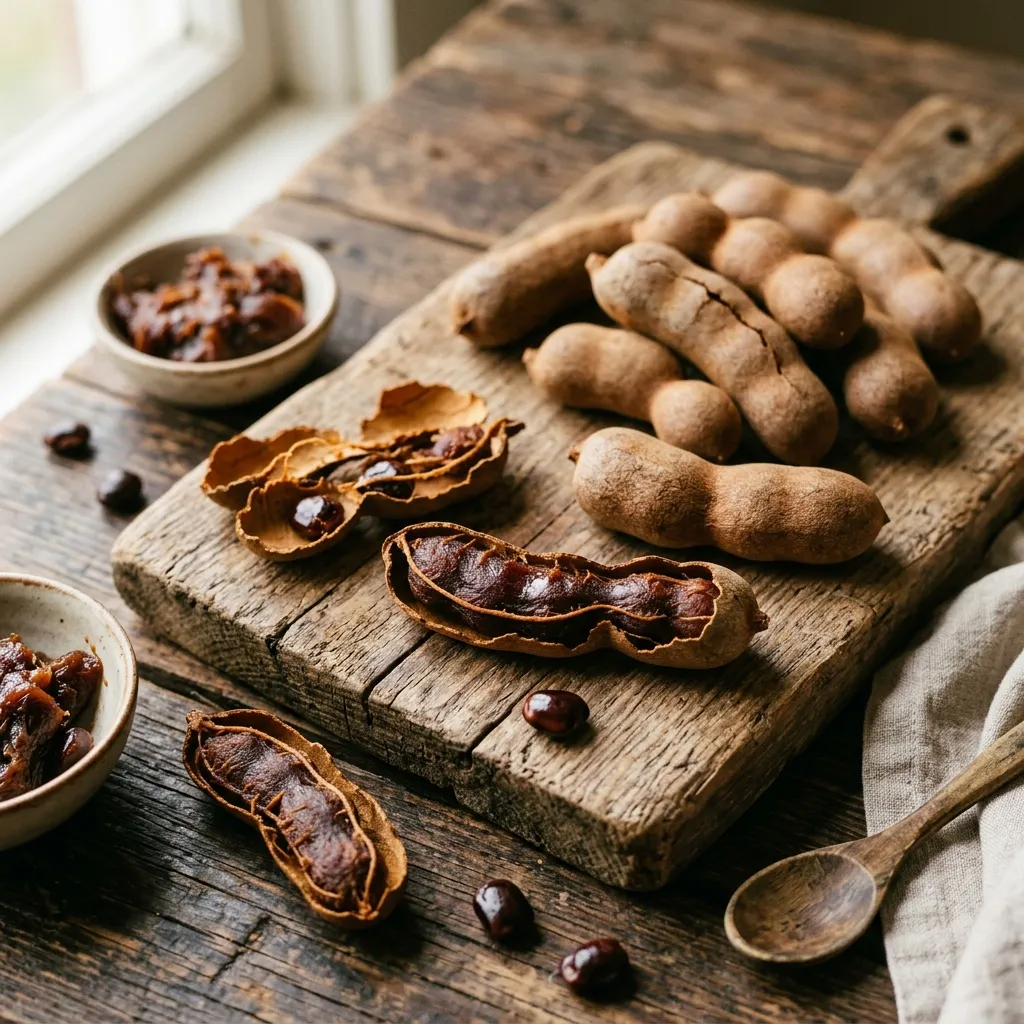
Tamarind yields sour, sticky bean-like pods that are highly valued for balancing spices in savory stews, candies, and sauces.

Regional names

Tamarind

Origin

Tamarind has been cultivated for centuries, moving from wild native origins along tropical and subtropical trade paths.

Native region

Tropical Americas, Southeast Asia, and Pacific Islands

Season

Varies by fruit type and import season
Food Combinations & Timing

Safe Combination Profile

It is safe to eat this food item with other food items.

🌅Best Eaten Before Sunset

Circadian Digestion Rule: Fruits are best consumed during the daytime. As the sun sets, human metabolism slows down and insulin sensitivity decreases as melatonin rises. Eating high-fructose fruits after sunset can trigger blood sugar spikes.

Scientific Reason: Fruits digest extremely rapidly (often within 20–30 minutes). When eaten late at night when gut motility slows down, they can sit and ferment in the digestive tract, leading to gas, bloating, acid reflux, and disrupted sleep.

Nutritional profile

Calories

62 kcal / 100 g

Protein

0.8 g

Carbs

14.4 g

Fat

0.3 g

Fiber

1.7 g

Water content

High (80% to 90%)

Glycemic index

Generally low to moderate

Vitamins

  • Vitamin C
  • Vitamin A
  • Folate

Minerals

  • Potassium
  • Copper
  • Magnesium

Health benefits

Evidence-aligned highlights

  • Provides an excellent source of vitamin C, supporting immune cell function and skin healing.
  • Supplies natural fruit sugars and potassium to assist with muscle function and cellular hydration.
  • Contains dietary fiber and active plant enzymes that assist with digestion and gut motility.

Flavor notes

Highly acidic, Sour, Sweet, Tangy

Texture

Sticky, paste-like, and dense

Aroma

Rich, aromatic, and sweet

Pairings

Coconut, Lime, Mint, Ginger, Chili, Yogurt

Safety & toxicity

Edible parts

Flesh/pulp, Juice

Toxic or risky parts

Peel (in most cases, though some are edible), Seeds or large pits (choking hazard/bitter)

Raw vs cooked

Eaten raw when fully ripe; green or underripe forms are cooked or pickled in savory dishes.

Allergies & intolerances

Generally non-allergenic, though some tropical fruits cross-react with latex sensitivities.

Drug interactions

No major drug interactions reported in culinary portions.

Safe daily limit

1 to 2 cups of fresh fruit daily is a healthy serving size.

⚠️ Notice: This safety profile is a general guideline. Dietary tolerances differ; consult a healthcare professional for allergies or drug interactions. See our full disclaimer.

Who should avoid & how to handle it

Who should avoid or moderate

  • Those monitoring high fruit sugar intake or on strict low-glycemic diets may manage portion size.

Preparation & storage

  • Clean: Rinse the skin of tamarind before slicing to prevent blade contamination.
  • Cut: Peel the outer skin, remove seeds or pit if applicable, and slice the tender flesh.
  • Cook: Boil pods to extract pulp, strain out seeds, and use the concentrated paste in curries, pad thai, or drinks.
  • Store: Store whole at room temperature until fully ripe, then refrigerate for 3-5 days.
  • Preserve: Purée and freeze in molds, dry into chewy fruit strips, or cook into jams.

Cuisine & cultural use

Common cuisines

  • Global
  • Tropical
  • Dessert and pastry cuisines

Tamarind appears in Global, Tropical, Dessert and pastry cuisines, often because its flavor structure and prep speed fit both everyday cooking and ceremonial dishes.

Dynamic Substitutions

No alternatives recorded for this specific item. It is chemically or botanically unique in the database.

🌱 Cultivation & Production

Tamarind Home Growing Guide

Learn how to grow and cultivate tamarind at home, whether you live in an urban apartment or have access to outdoor garden land.

Apartment Friendly

✗ Not Ideal for Apartments

No

Urban Space Advice

Not recommended for apartments unless using specialized dwarf varieties in large, heavy pots.

Difficulty

Hard

Propagation

Grafting (commercial propagation) or seeds (slower growth).

Soil Type

Deep, well-draining garden soil

Watering

Deep watering once a week

Sunlight

Full sun (8+ hours daily)

Best Season

Spring planting; fruits in Summer/Autumn

Step-by-Step Growing Guide

  1. 1

    For garden planting: Choose a sunny spot with deep, fertile, well-draining soil.

  2. 2

    Dig a hole twice as wide as the root ball and plant at the same depth as the container.

  3. 3

    Water deeply once a week, especially during the first two years and during fruiting.

  4. 4

    Prune annually in late winter to remove dead wood and shape the tree for sun exposure.

Quick recipes

Fast recipes using Tamarind

Dinner

Slow-Braised Tamarind Glazed Beef Ribs

Sign in to save

Beef ribs slow-cooked for three hours in a tangy, spiced tamarind and ginger broth.

Ingredients

Servings:2
  • 2 lbs beef short ribs
  • 3 tbsp tamarind paste
  • 2 tbsp soy sauce
  • 2 tbsp brown sugar
  • 1 inch ginger, sliced
  • 3 cloves garlic, crushed
  • 2 cups beef broth

Nutrition

  • 540 kcal
  • 32 g protein
  • 14 g carbs
  • 40 g fat

Preparation Steps

  1. 1Preheat oven to 325°F (163°C). Sear short ribs in a heavy pot until browned.
  2. 2Whisk tamarind paste, soy sauce, brown sugar, ginger, garlic, and beef broth; pour over ribs.
  3. 3Cover tightly and braise in the oven for 2.5 to 3 hours until beef is fall-apart tender.

Side

Indian Sweet & Sour Tamarind Chutney

Sign in to save

A classic Indian condiment of slow-simmered tamarind pulp, jaggery, and ginger.

Ingredients

Servings:2
  • 1/2 cup tamarind pulp, seedless
  • 3/4 cup jaggery, grated
  • 1/2 tsp ginger powder
  • 2 cups water

Nutrition

  • 90 kcal
  • 1 g protein
  • 22 g carbs
  • 0 g fat

Preparation Steps

  1. 1Boil tamarind pulp and jaggery in water in a saucepan over medium heat.
  2. 2Stir in ginger powder and reduce heat to low.
  3. 3Simmer uncovered for 45 minutes, stirring occasionally, until the liquid reduces to a thick sauce.
  4. 4Strain through a sieve, let cool completely, and serve with cookies or samosas.

Dinner

Indian Gujarati Dal

Sign in to save

Sweet and sour split pigeon peas cooked slowly with tamarind, jaggery, and ginger.

Ingredients

Servings:2
  • 1/2 cup toor dal (pigeon peas)
  • 1 tbsp tamarind paste
  • 1 1/2 tbsp jaggery
  • 1/2 tsp ginger, grated
  • 1 tbsp ghee
  • 1/2 tsp mustard seeds

Nutrition

  • 210 kcal
  • 9 g protein
  • 32 g carbs
  • 5 g fat

Preparation Steps

  1. 1Boil toor dal in water until completely mushy. Whisk until smooth.
  2. 2Add tamarind paste, jaggery, grated ginger, and salt. Simmer Dal on low for 40 minutes.
  3. 3In a small pan, heat ghee and temper mustard seeds until they splutter.
  4. 4Pour hot tempering into the Dal, stir well, and serve hot with rice.