TurnipCarrot
Plant-BasedVegetables
🟢Safe

Beetroot

Beta vulgaris

Facts

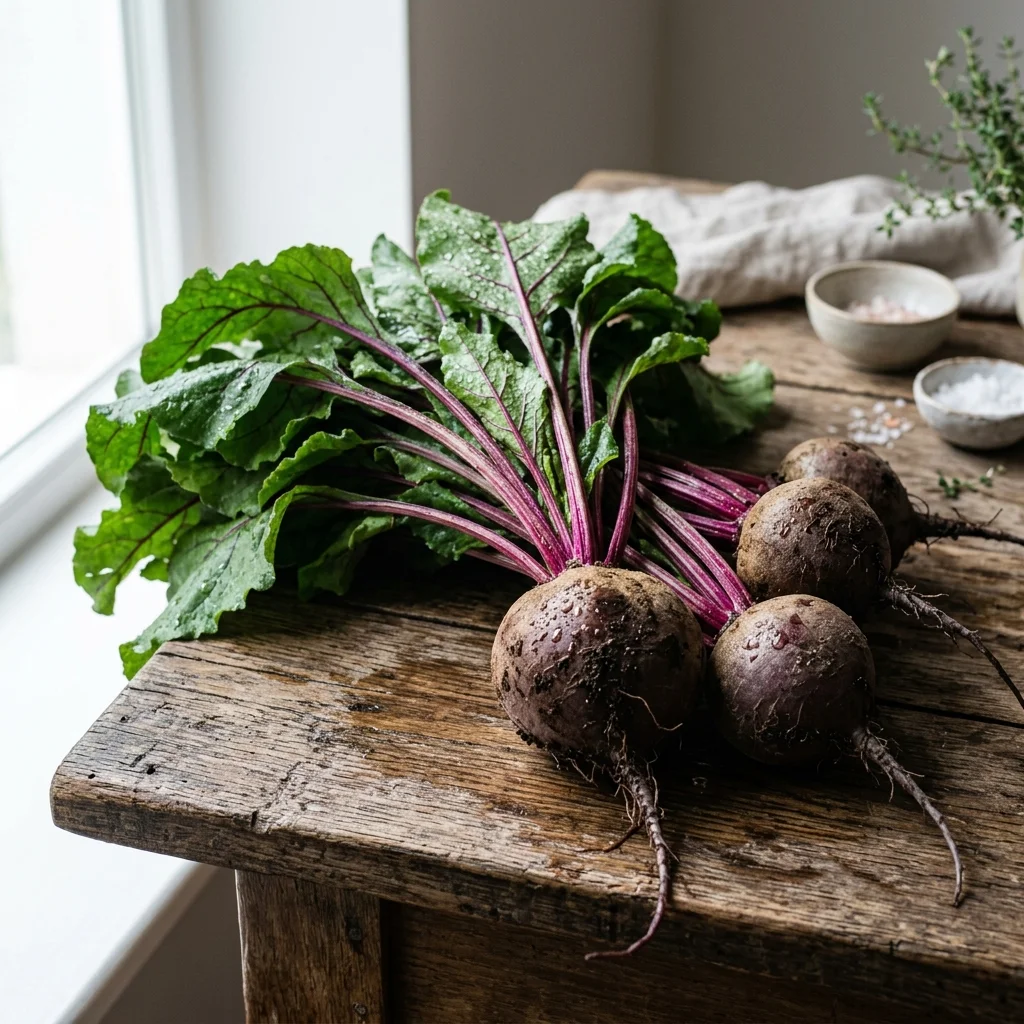
Beetroot is an earthy root vegetable, rich in complex carbohydrates, minerals, and natural sugars that caramelize deeply upon cooking.

Regional names

Beetroot

Origin

Beetroot has been bred globally for crop density, edible leaves, roots, and pods, anchoring agriculture across continents.

Native region

Temperate Europe, the Mediterranean, and western Asia

Season

Highly seasonal by crop, with some year-round supply
Food Combinations & Timing

Safe Combination Profile

It is safe to eat this food item with other food items.

Nutritional profile

Calories

43 kcal / 100 g

Protein

1.6 g

Carbs

9.6 g

Fat

0.2 g

Fiber

2.8 g

Water content

High (85% to 95%)

Glycemic index

Low to moderate

Vitamins

  • Vitamin C
  • Vitamin K
  • Vitamin A

Minerals

  • Potassium
  • Folate
  • Calcium

Health benefits

Evidence-aligned highlights

  • High in dietary fibers that nurture gut microbes and slow glucose release.
  • Supplies essential potassium and trace minerals to support electrolyte equilibrium.
  • Contains active antioxidants like carotenoids or betalains, depending on root color.

Flavor notes

Sweet, Earthy, Root-like, Slightly peppery

Texture

Crunchy and dense raw, tender when cooked

Aroma

Earthy and sweet

Pairings

Butter, Thyme, Rosemary, Honey, Garlic, Goat cheese

Safety & toxicity

Edible parts

Root tap, Edible green tops (if fresh and washed)

Toxic or risky parts

Peel can be bitter or carry dirt; wash or peel before eating

Raw vs cooked

Eaten raw (sliced/shredded) or roasted, boiled, and mashed.

Allergies & intolerances

Allergies are rare, though carrot allergies can connect to mugwort pollen sensitivity.

Drug interactions

No typical drug interactions in food amounts.

Safe daily limit

1 to 2 servings daily.

⚠️ Notice: This safety profile is a general guideline. Dietary tolerances differ; consult a healthcare professional for allergies or drug interactions. See our full disclaimer.

Who should avoid & how to handle it

Who should avoid or moderate

  • Contains oxalates; moderate if prone to calcium oxalate kidney stones. May cause temporary pink/red coloration of urine or stools (beeturia), which is harmless.

Preparation & storage

  • Clean: Scrub with a stiff vegetable brush under running water to remove all soil residues.
  • Cut: Peel the outer skin if tough, then dice, julienne, or slice into rounds.
  • Cook: Roast at high heat (400°F/200°C) with oil to caramelize natural sugars, or simmer in soups.
  • Store: Store in the refrigerator crisper drawer in a bag; remove green tops first to prevent drying.
  • Preserve: Pickle in vinegar brine, or blanch and freeze sliced rounds.

Cuisine & cultural use

Common cuisines

  • Global savory cooking
  • Soups, stews, and roasted sides

Beetroot appears in Global savory cooking, Soups, stews, and roasted sides, often because its flavor structure and prep speed fit both everyday cooking and ceremonial dishes.

Dynamic Substitutions

No alternatives recorded for this specific item. It is chemically or botanically unique in the database.

🌱 Cultivation & Production

Beetroot Home Growing Guide

Learn how to grow and cultivate beetroot at home, whether you live in an urban apartment or have access to outdoor garden land.

Apartment Friendly

✓ Highly Recommended

Yes

Urban Space Advice

Can be grown successfully in deep grow bags (at least 12 inches deep) on balconies.

Difficulty

Medium

Propagation

Seeds

Soil Type

Loose, stone-free sandy soil to prevent root malformation

Watering

Consistent (moist soil promotes uniform roots and sweet flavor)

Sunlight

Full sun to partial shade (5-6 hours daily)

Best Season

Early Spring or early Autumn

Step-by-Step Growing Guide

  1. 1

    Choose a grow bag or container at least 12 inches deep with excellent drainage.

  2. 2

    Sow seeds directly (or plant sprouted potato chunks 4 inches deep).

  3. 3

    Keep the soil evenly moist and thin seedlings early to give them space to swell.

  4. 4

    Harvest when the root crowns emerge from the soil or the leaves begin to yellow.

Quick recipes

Fast recipes using Beetroot

Lunch

South Indian Beetroot Poriyal (Quick Stir-Fry)

Sign in to save

Finely diced sweet beetroot sautéed with black mustard seeds, split urad dal, curry leaves, and freshly grated coconut.

Ingredients

Servings:2
  • 2 medium beetroots, finely diced
  • 1 tbsp coconut oil
  • 1/2 tsp mustard seeds
  • 1/2 tsp urad dal
  • 1 dry red chili
  • 6 curry leaves
  • 2 tbsp grated coconut

Nutrition

  • 140 kcal
  • 3 g protein
  • 16 g carbs
  • 7 g fat

Preparation Steps

  1. 1Heat coconut oil, add mustard seeds, urad dal, red chili, and curry leaves.
  2. 2Add diced beetroot with a sprinkle of water and salt. Cover and steam for 12 minutes.
  3. 3Finish by tossing with fresh grated coconut and serve hot with rice or rasam.