BroccoliniCabbage
Plant-BasedVegetables
🟢Safe

Brussels Sprouts

Brassica oleracea var. gemmifera

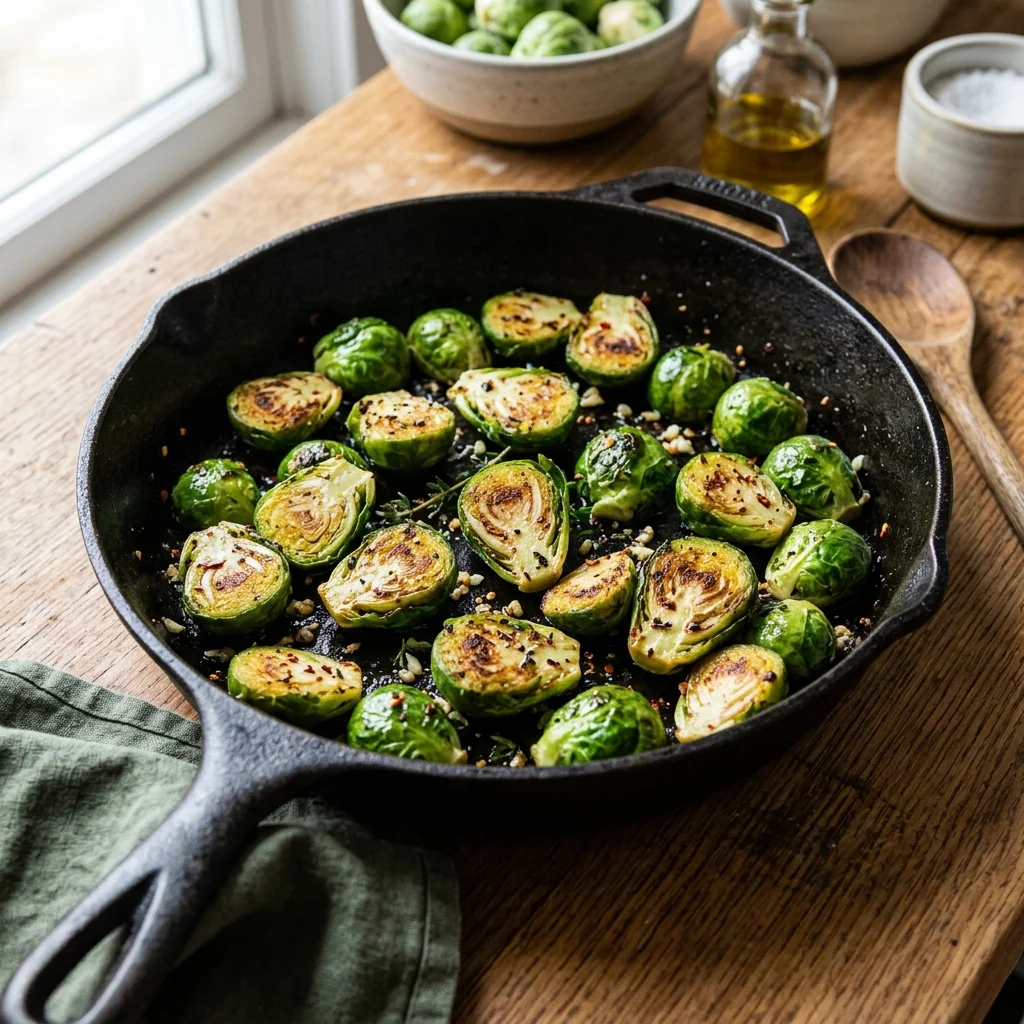
Brussels Sprouts is a hardy cruciferous vegetable, celebrated for its structural crunch, high sulfur compounds, and outstanding baking/roasting properties.

Regional names

Brussels Sprouts

Origin

Brussels Sprouts has been bred globally for crop density, edible leaves, roots, and pods, anchoring agriculture across continents.

Native region

Coastal Europe and the Mediterranean basin

Season

Highly seasonal by crop, with some year-round supply
Food Combinations & Timing

Safe Combination Profile

It is safe to eat this food item with other food items.

Nutritional profile

Calories

43 kcal / 100 g

Protein

3.4 g

Carbs

9.0 g

Fat

0.3 g

Fiber

3.8 g

Water content

High (85% to 95%)

Glycemic index

Low

Vitamins

  • Vitamin C
  • Vitamin K
  • Vitamin A

Minerals

  • Potassium
  • Folate
  • Calcium

Health benefits

Evidence-aligned highlights

  • Contains glucosinolates, compounds that break down into cancer-preventive isothiocyanates.
  • Rich in vitamin C and vitamin K to assist vascular elasticity and cellular collagen.
  • Provides dense insoluble fiber to improve bowel motility and support weight management.

Flavor notes

Peppery, Sulfurous, Slightly sweet, Nutty when roasted

Texture

Crunchy and structural raw, tender-crisp when cooked

Aroma

Green, distinct, and sulfurous

Pairings

Lemon, Garlic, Parmesan, Olive oil, Mustard, Chili flakes

Safety & toxicity

Edible parts

Florets, Tender leaves, Inner stems

Toxic or risky parts

Tough fibrous outer skin of stalks (discard culinarily)

Raw vs cooked

Eaten raw in slaws or cooked. Cooking reduces gas-inducing sugars and goitrogenic compounds.

Allergies & intolerances

Brassica allergy is rare but possible; can cause bloating in sensitive individuals.

Drug interactions

High vitamin K levels can interact with warfarin therapies; maintain a steady intake.

Safe daily limit

1 to 2 cups of cruciferous vegetables daily is highly recommended.

⚠️ Notice: This safety profile is a general guideline. Dietary tolerances differ; consult a healthcare professional for allergies or drug interactions. See our full disclaimer.

Who should avoid & how to handle it

Who should avoid or moderate

  • People with thyroid conditions may moderate massive raw intake; cooking neutralizes goitrogens.

Preparation & storage

  • Clean: Rinse florets thoroughly or soak in water for a few minutes to clear hidden insects or dirt.
  • Cut: Cut into bite-size florets; peel thick stalks to chop the tender sweet interior.
  • Cook: Roast with oil, salt, and garlic until tips are charred, or steam for 4-6 minutes.
  • Store: Keep dry in a plastic bag in the refrigerator; use within 5-7 days.
  • Preserve: Blanch florets for 3 minutes, chill in ice water, drain completely, and freeze.

Cuisine & cultural use

Common cuisines

  • Global savory cooking
  • Soups, stews, and roasted sides

Brussels Sprouts appears in Global savory cooking, Soups, stews, and roasted sides, often because its flavor structure and prep speed fit both everyday cooking and ceremonial dishes.

Dynamic Substitutions

No alternatives recorded for this specific item. It is chemically or botanically unique in the database.

🌱 Cultivation & Production

Brussels Sprouts Home Growing Guide

Learn how to grow and cultivate brussels sprouts at home, whether you live in an urban apartment or have access to outdoor garden land.

Apartment Friendly

✗ Not Ideal for Apartments

No

Urban Space Advice

Not recommended for apartments unless using specialized dwarf varieties in large, heavy pots.

Difficulty

Hard

Propagation

Grafting (commercial propagation) or seeds (slower growth).

Soil Type

Deep, well-draining garden soil

Watering

Deep watering once a week

Sunlight

Full sun (8+ hours daily)

Best Season

Spring planting; fruits in Summer/Autumn

Step-by-Step Growing Guide

  1. 1

    For garden planting: Choose a sunny spot with deep, fertile, well-draining soil.

  2. 2

    Dig a hole twice as wide as the root ball and plant at the same depth as the container.

  3. 3

    Water deeply once a week, especially during the first two years and during fruiting.

  4. 4

    Prune annually in late winter to remove dead wood and shape the tree for sun exposure.

Quick recipes

Fast recipes using Brussels Sprouts

Side

Roasted Balsamic Brussels Sprouts

Sign in to save

Crisp-roasted Brussels sprouts tossed in olive oil and finished with a sweet balsamic glaze.

Ingredients

Servings:2
  • 2 cups Brussels sprouts, halved
  • 1 1/2 tbsp olive oil
  • 1 tbsp balsamic vinegar
  • Pinch of sea salt

Nutrition

  • 120 kcal
  • 3 g protein
  • 12 g carbs
  • 7 g fat

Preparation Steps

  1. 1Preheat the oven to 400°F (205°C).
  2. 2Toss Brussels sprouts with olive oil and sea salt on a baking tray.
  3. 3Roast for 20 minutes until tender and caramelized at the edges.
  4. 4Drizzle with balsamic vinegar, toss well, and serve hot.