Bottle GourdCucumber
Plant-BasedVegetables
🟢Safe

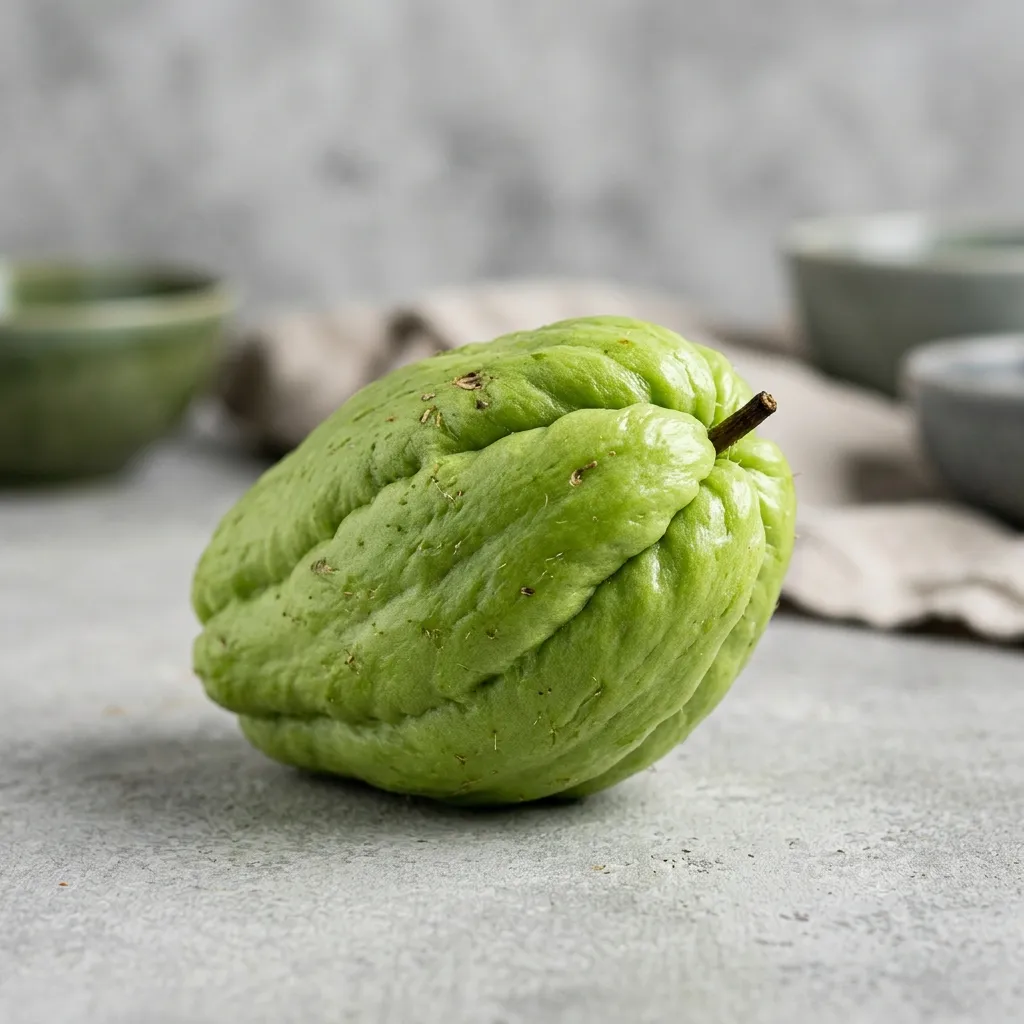
Chayote

Sechium edule

Chayote is a moisture-rich gourd, offering cooling culinary qualities, mild flavors, and exceptional low-calorie hydration.

Regional names

Chayote

Origin

Chayote has been bred globally for crop density, edible leaves, roots, and pods, anchoring agriculture across continents.

Native region

Tropical Americas, Asia, and Africa

Season

Highly seasonal by crop, with some year-round supply
Food Combinations & Timing

Safe Combination Profile

It is safe to eat this food item with other food items.

Nutritional profile

Calories

16 kcal / 100 g

Protein

0.8 g

Carbs

3.7 g

Fat

0.2 g

Fiber

1.0 g

Water content

Extremely high (94% to 96%)

Glycemic index

Low

Vitamins

  • Vitamin C
  • Vitamin K
  • Vitamin A

Minerals

  • Potassium
  • Folate
  • Calcium

Health benefits

Evidence-aligned highlights

  • Provides excellent hydration due to its high water volume.
  • Low in calories and carbohydrates, fitting easily into calorie-controlled diets.
  • Contains antioxidants like beta-carotene and lutein in green-skinned varieties.

Flavor notes

Mild, Sweet, Watery, Fresh, Cooling

Texture

Crisp and watery raw, soft and spongy when cooked

Aroma

Fresh, light, and green

Pairings

Lemon, Dill, Feta cheese, Mint, Tomato, Garlic, Yogurt

Safety & toxicity

Edible parts

Skin (if tender), Flesh, Seeds (if soft and small)

Toxic or risky parts

Tough seeds of mature gourds (discard), Avoid extremely bitter gourds (indicates toxic cucurbitacin accumulation)

Raw vs cooked

Eaten raw (cucumbers/zucchini) or cooked (pumpkins/winter gourds).

Allergies & intolerances

Allergies are very rare.

Drug interactions

No typical drug interactions.

Safe daily limit

Enjoy generously for hydration and fiber.

⚠️ Notice: This safety profile is a general guideline. Dietary tolerances differ; consult a healthcare professional for allergies or drug interactions. See our full disclaimer.

Who should avoid & how to handle it

Who should avoid or moderate

  • Generally safe for everyone; highly digestible.

Preparation & storage

  • Clean: Wash the skin thoroughly to remove dirt and food-safe wax coatings.
  • Cut: Slice into rounds, dice for curries, or spiralize into vegetable noodles.
  • Cook: Saute quickly with garlic and herbs, or roast winter gourds until flesh is tender.
  • Store: Refrigerate in dry bags; use cucumbers and zucchini within a week.
  • Preserve: Pickle cucumbers in vinegar/salt brine, or freeze cooked winter gourd purée.

Cuisine & cultural use

Common cuisines

  • Global savory cooking
  • Soups, stews, and roasted sides

Chayote appears in Global savory cooking, Soups, stews, and roasted sides, often because its flavor structure and prep speed fit both everyday cooking and ceremonial dishes.

Dynamic Substitutions

No alternatives recorded for this specific item. It is chemically or botanically unique in the database.

🌱 Cultivation & Production

Chayote Home Growing Guide

Learn how to grow and cultivate chayote at home, whether you live in an urban apartment or have access to outdoor garden land.

Apartment Friendly

✓ Highly Recommended

Yes

Urban Space Advice

Possible on balconies. Requires a trellis/stakes for support and manual hand-pollination of flowers.

Difficulty

Medium

Propagation

Seeds

Soil Type

Rich, loamy soil with abundant organic compost

Watering

Heavy (water deeply whenever topsoil dries out)

Sunlight

Full, direct sun (6-8 hours daily)

Best Season

Warm season (Late Spring to Summer)

Step-by-Step Growing Guide

  1. 1

    Sow seeds indoors in small pots, then transplant into a 5-gallon container on a sunny balcony.

  2. 2

    Provide a strong trellis, stakes, or cage for support early in the growth cycle.

  3. 3

    Keep soil watered regularly, as dry soil causes fruit blossom-end rot.

  4. 4

    Gently tap flowers or use a clean cotton swab to hand-pollinate blossoms if growing indoors.

Quick recipes

Fast recipes using Chayote

Lunch

Chow Chow Kootu

Sign in to save

Comforting South Indian chayote squash stew cooked with lentils and cumin.

Ingredients

Servings:2
  • 1 chayote squash, diced
  • 1/4 cup yellow moong dal
  • 1 tsp cumin seeds
  • 2 tbsp grated coconut
  • 1 tsp mustard seeds
  • 1 tsp oil

Nutrition

  • 130 kcal
  • 6 g protein
  • 16 g carbs
  • 5 g fat

Preparation Steps

  1. 1Boil chayote and moong dal in water until soft (15 minutes).
  2. 2Grind cumin and coconut into a paste; stir into the squash and dal.
  3. 3Temper with crackled mustard seeds in oil and serve hot.