Poisonous AmanitaDestroying Angel
Plant-BasedMushrooms & Fungi
🔴Avoid / Toxic

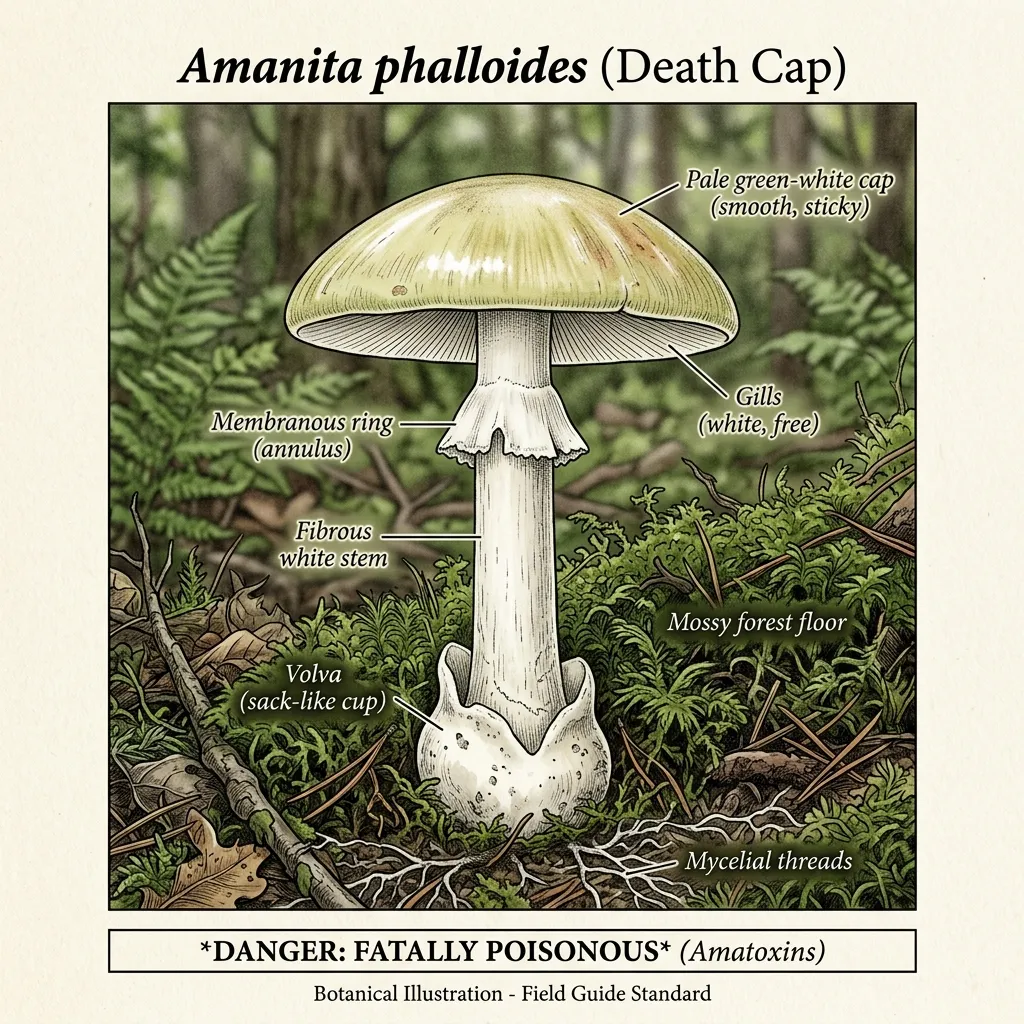
Death Cap

Amanita phalloides

CRITICAL SAFETY WARNING: Death Cap (Amanita phalloides) is one of the deadliest poisonous wild mushrooms known. Responsible for the majority of fatal mushroom poisonings globally, it contains potent amatoxins that cause irreversible liver and kidney destruction. It dangerously resembles edible paddy straw mushrooms and field mushrooms.

Regional names

Death Cap Mushroom, Deadly Amanita, Destroying Cap

Origin

Native to Europe and introduced widely to North America, Australia, and coastal ecosystems.

Native region

Europe and temperate regions globally

Season

Summer through late autumn
Food Combinations & Timing

Safe Combination Profile

It is safe to eat this food item with other food items.

Nutritional profile

Calories

0 kcal / 100 g

Protein

0 g

Carbs

0 g

Fat

0 g

Fiber

0 g

Water content

Inedible / Poisonous

Glycemic index

N/A

Vitamins

  • None — Inedible

Minerals

  • None — Inedible

Health benefits

Evidence-aligned highlights

  • NONE — HIGHLY TOXIC / LETHAL WILD MUSHROOM FLAGGED FOR SAFETY WARNING & IDENTIFICATION

Flavor notes

Deceptively mild, Inedible

Texture

Inedible / Toxic

Aroma

Faintly sweet or foul in age

Pairings

NONE — Do Not Consume

Safety & toxicity

Edible parts

NONE — Completely Inedible and Fatal

Toxic or risky parts

Whole Mushroom (Cap, Gills, Stem, Volva, and Spores)

Raw vs cooked

FATAL / DEADLY TOXIC — Do NOT consume raw or cooked under any circumstances. Cooking, boiling, freezing, or drying DOES NOT neutralize amatoxins.

Allergies & intolerances

Irrelevant — Lethal systemic poison upon ingestion.

Drug interactions

Severe lethal toxicity destroying hepatic and renal cells.

Safe daily limit

0 g (DO NOT CONSUME — FATAL RISK)

⚠️ Notice: This safety profile is a general guideline. Dietary tolerances differ; consult a healthcare professional for allergies or drug interactions. See our full disclaimer.

Who should avoid & how to handle it

Who should avoid or moderate

  • EVERYONE — Severe Poisoning / Fatal Organ Failure Risk

Preparation & storage

  • Clean: DO NOT PREPARE OR EAT. Handle only with protective gloves for botanical identification.
  • Cut: DO NOT CUT OR COOK. Wash hands immediately if touched.
  • Cook: DO NOT COOK. Heat does not destroy lethal amatoxins.
  • Store: DO NOT STORE NEAR FOOD. Never place near edible produce or mushrooms.
  • Preserve: N/A — Strictly Inedible.

Cuisine & cultural use

Common cuisines

  • NONE — Strictly Inedible Wild Fungi

Death Cap appears in NONE — Strictly Inedible Wild Fungi, often because its flavor structure and prep speed fit both everyday cooking and ceremonial dishes.

Dynamic Substitutions

No alternatives recorded for this specific item. It is chemically or botanically unique in the database.

🌱 Cultivation & Production

Death Cap Home Growing Guide

Learn how to grow and cultivate death cap at home, whether you live in an urban apartment or have access to outdoor garden land.

Apartment Friendly

✓ Highly Recommended

Yes

Urban Space Advice

Excellent for indoor apartments. Requires no sunlight and thrives in dark, humid cupboards or closets.

Difficulty

Easy

Propagation

Mycelium spawn on sawdust or grain

Soil Type

Sawdust blocks, straw, or spent coffee grounds (no soil)

Watering

Mist multiple times daily to maintain 85%+ relative humidity

Sunlight

Shade / Dark (no direct sunlight)

Best Season

Year-round indoors

Step-by-Step Growing Guide

  1. 1

    Obtain a ready-to-fruit mushroom grow kit or mix spawn with pasteurized straw/sawdust.

  2. 2

    Keep in a cool, draft-free closet or cupboard.

  3. 3

    Mist the surface daily with a spray bottle to trigger pinning.

  4. 4

    Harvest the crop once the caps expand but before the edges roll upward.

Quick recipes

Fast recipes using Death Cap

Recipe links for Death Cap have not been seeded yet, but the full nutrition, safety, preparation, cuisine, and pairing details for this ingredient are already available above.