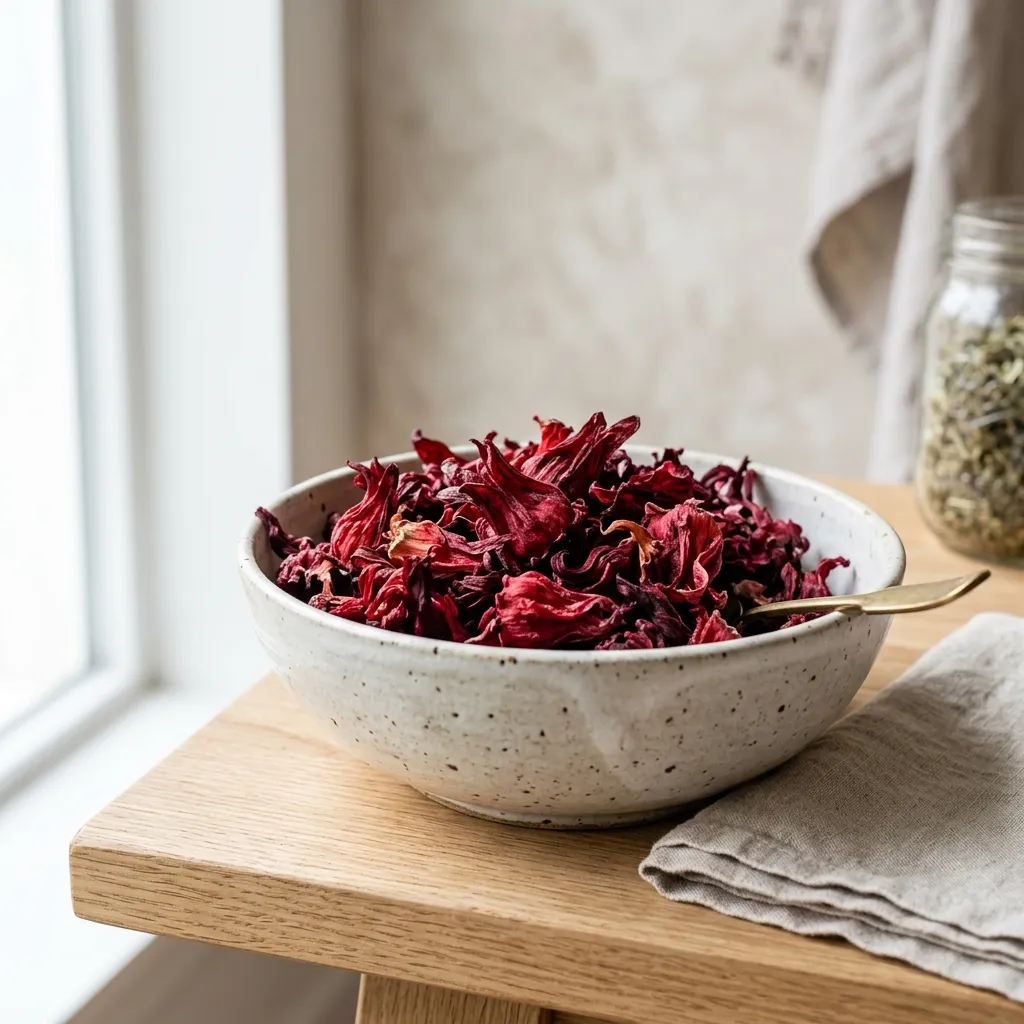
Dried HibiscusHibiscus Syrup
Plant-BasedEdible Flowers
🟡Caution

Hibiscus

Hibiscus sabdariffa

Facts

Hibiscus contributes vivid color and cranberry-like acidity to beverages, desserts, and fruit-based sauces.

Regional names

Roselle, Sorrel, Karkade

Origin

Edible calyx used for tart teas, syrups, jams, and bright savory condiments.

Native region

West Africa and tropical regions worldwide

Season

Often sold dried year-round
Food Combinations & Timing

Safe Combination Profile

It is safe to eat this food item with other food items.

Nutritional profile

Calories

37 kcal / 100 g

Protein

0.4 g

Carbs

9.7 g

Fat

0.6 g

Fiber

0.3 g

Water content

Typically infused rather than eaten in volume

Glycemic index

Low in unsweetened infusions

Vitamins

  • Trace vitamin C

Minerals

  • Manganese
  • Calcium

Health benefits

Evidence-aligned highlights

  • Adds bold acidity and color without much sugar when unsweetened.
  • Contains polyphenol pigments with antioxidant activity.
  • Useful for replacing sugary drink concentrates with a sharper herbal profile.

Flavor notes

Tart, Berry-like, Floral

Texture

Soft after simmering, papery when dry

Aroma

Tangy floral aroma

Pairings

Lime, Ginger, Maple syrup, Berries, Mint

Safety & toxicity

Edible parts

Food-safe dried calyxes, Infusions, Syrups made from culinary hibiscus

Toxic or risky parts

Non-culinary ornamental flowers should not be assumed edible

Raw vs cooked

Usually steeped, simmered, or reduced into syrup rather than eaten raw in large amounts.

Allergies & intolerances

Flower or herbal tea sensitivities are possible but uncommon.

Drug interactions

Large concentrated intakes may matter for people on blood pressure or glucose medicines.

Safe daily limit

Normal tea or syrup servings are fine for most adults.

⚠️ Notice: This safety profile is a general guideline. Dietary tolerances differ; consult a healthcare professional for allergies or drug interactions. See our full disclaimer.

Who should avoid & how to handle it

Who should avoid or moderate

  • Pregnant people and those on intensive blood pressure management should confirm tolerance if using large amounts regularly.

Preparation & storage

  • Clean: Use dried culinary hibiscus from food-safe sources.
  • Cut: No cutting needed for dried petals.
  • Cook: Steep in hot water or simmer with sugar for syrups and jams.
  • Store: Keep dry and sealed away from light.
  • Preserve: Dried form stores well for months in airtight containers.

Cuisine & cultural use

Common cuisines

  • Caribbean
  • Mexican
  • West African
  • Middle Eastern beverages

Hibiscus appears in Caribbean, Mexican, West African, Middle Eastern beverages, often because its flavor structure and prep speed fit both everyday cooking and ceremonial dishes.

Dynamic Substitutions

No alternatives recorded for this specific item. It is chemically or botanically unique in the database.

🌱 Cultivation & Production

Hibiscus Home Growing Guide

Learn how to grow and cultivate hibiscus at home, whether you live in an urban apartment or have access to outdoor garden land.

Apartment Friendly

✗ Not Ideal for Apartments

No

Urban Space Advice

Not recommended for apartments unless using specialized dwarf varieties in large, heavy pots.

Difficulty

Hard

Propagation

Grafting (commercial propagation) or seeds (slower growth).

Soil Type

Deep, well-draining garden soil

Watering

Deep watering once a week

Sunlight

Full sun (8+ hours daily)

Best Season

Spring planting; fruits in Summer/Autumn

Step-by-Step Growing Guide

  1. 1

    For garden planting: Choose a sunny spot with deep, fertile, well-draining soil.

  2. 2

    Dig a hole twice as wide as the root ball and plant at the same depth as the container.

  3. 3

    Water deeply once a week, especially during the first two years and during fruiting.

  4. 4

    Prune annually in late winter to remove dead wood and shape the tree for sun exposure.

Quick recipes

Fast recipes using Hibiscus

Snack

Candied Hibiscus & Spiced Almond Snack Mix

Sign in to save

Chewy candied hibiscus flowers tossed with raw Brazil nuts and toasted almond meal.

Ingredients

Servings:2
  • 1/2 cup candied hibiscus flowers
  • 1/3 cup raw Brazil nuts
  • 2 tbsp toasted almond meal
  • Pinch sea salt

Nutrition

  • 230 kcal
  • 5 g protein
  • 20 g carbs
  • 16 g fat

Preparation Steps

  1. 1Combine candied hibiscus flowers and Brazil nuts in a bowl.
  2. 2Dust with toasted almond meal and sea salt, tossing to coat evenly.