
MangosteenRambutan
Plant-BasedFruits
🟢Safe

Pomegranate

Punica granatum

Facts

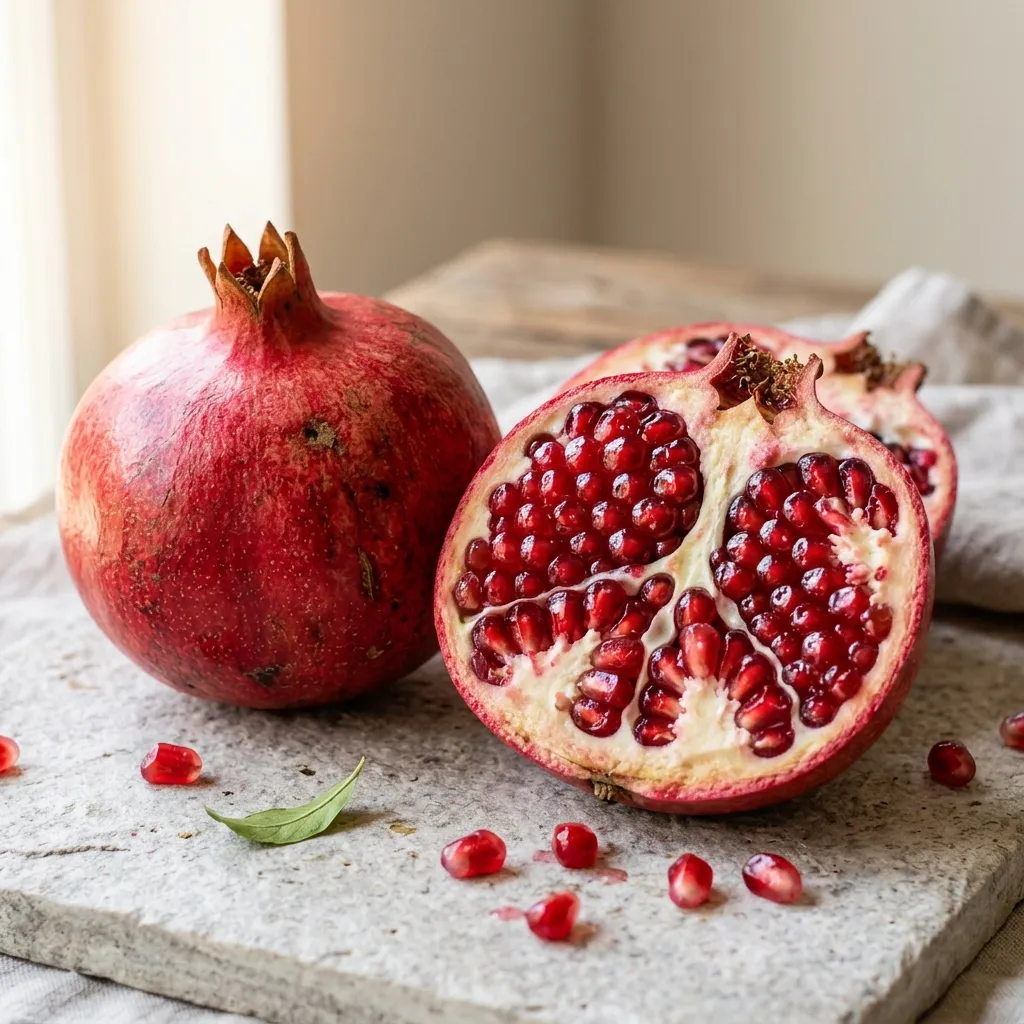
Pomegranate is a round fruit featuring a thick red skin packing hundreds of juicy, ruby-red edible seeds (arils) prized for their sweet-tart flavor and antioxidants.

Regional names

Anar, Granada, Melograno

Origin

Native to a region from Iran to northern India, cultivated since ancient times.

Native region

Middle East and South Asia

Season

Autumn through early winter (typically October to February)
Food Combinations & Timing

Safe Combination Profile

It is safe to eat this food item with other food items.

🌅Best Eaten Before Sunset

Circadian Digestion Rule: Fruits are best consumed during the daytime. As the sun sets, human metabolism slows down and insulin sensitivity decreases as melatonin rises. Eating high-fructose fruits after sunset can trigger blood sugar spikes.

Scientific Reason: Fruits digest extremely rapidly (often within 20–30 minutes). When eaten late at night when gut motility slows down, they can sit and ferment in the digestive tract, leading to gas, bloating, acid reflux, and disrupted sleep.

Nutritional profile

Calories

83 kcal / 100 g

Protein

1.7 g

Carbs

19 g

Fat

1.2 g

Fiber

4 g

Water content

78%

Glycemic index

35

Vitamins

  • Vitamin C
  • Vitamin K
  • Folate

Minerals

  • Potassium
  • Copper
  • Phosphorus

Health benefits

Evidence-aligned highlights

  • Rich in punicalagins and punicic acid, powerful antioxidants.
  • Supports heart health by helping manage blood pressure.
  • Possesses anti-inflammatory properties that support joint health.

Flavor notes

Sweet-tart, Astringent, Berry-like, Bright

Texture

Crunchy and juicy

Aroma

Fruity and slightly earthy

Pairings

Walnuts, Feta cheese, Mint, Pistachios, Yogurt

Safety & toxicity

Edible parts

Juicy red arils (seeds)

Toxic or risky parts

Tough leathery peel and bitter white pith are not edible

Raw vs cooked

Typically eaten raw or pressed into juice.

Allergies & intolerances

Allergies are very rare but possible.

Drug interactions

May interact with blood pressure medications and blood thinners in large quantities.

Safe daily limit

One whole fruit or 1 cup of arils daily is healthy.

⚠️ Notice: This safety profile is a general guideline. Dietary tolerances differ; consult a healthcare professional for allergies or drug interactions. See our full disclaimer.

Who should avoid & how to handle it

Who should avoid or moderate

  • Consult doctor if taking ACE inhibitors or anticoagulants.

Preparation & storage

  • Clean: Wash the outer rind thoroughly before scoring.
  • Cut: Cut off the top crown, score the skin in sections, and submerge in a bowl of water to easily separate the arils from the white pith.
  • Cook: Usually served fresh; can be reduced into pomegranate molasses.
  • Store: Keep whole fruit at room temperature for up to a week, or refrigerate for up to 2 months. Keep loose arils in an airtight container in the fridge for up to 5 days.
  • Preserve: Freeze arils in a single layer on a baking sheet, then transfer to a freezer bag for long-term storage.

Cuisine & cultural use

Common cuisines

  • Middle Eastern
  • Mediterranean
  • Persian
  • Indian

Pomegranate appears in Middle Eastern, Mediterranean, Persian, Indian, often because its flavor structure and prep speed fit both everyday cooking and ceremonial dishes.

Dynamic Substitutions

No alternatives recorded for this specific item. It is chemically or botanically unique in the database.

🌱 Cultivation & Production

Pomegranate Home Growing Guide

Learn how to grow and cultivate pomegranate at home, whether you live in an urban apartment or have access to outdoor garden land.

Apartment Friendly

✓ Highly Recommended

Yes

Urban Space Advice

Possible on balconies. Requires a trellis/stakes for support and manual hand-pollination of flowers.

Difficulty

Medium

Propagation

Seeds

Soil Type

Rich, loamy soil with abundant organic compost

Watering

Heavy (water deeply whenever topsoil dries out)

Sunlight

Full, direct sun (6-8 hours daily)

Best Season

Warm season (Late Spring to Summer)

Step-by-Step Growing Guide

  1. 1

    Sow seeds indoors in small pots, then transplant into a 5-gallon container on a sunny balcony.

  2. 2

    Provide a strong trellis, stakes, or cage for support early in the growth cycle.

  3. 3

    Keep soil watered regularly, as dry soil causes fruit blossom-end rot.

  4. 4

    Gently tap flowers or use a clean cotton swab to hand-pollinate blossoms if growing indoors.

Quick recipes

Fast recipes using Pomegranate

Snack

Quick Shakarkandi Chaat (Spiced Sweet Potato Salad)

Sign in to save

Roasted sweet potato cubes seasoned with black salt, roasted cumin, pomegranate seeds, and fresh mint chutney.

Ingredients

Servings:2
  • 2 medium sweet potatoes, boiled & cubed
  • 1 tsp chaat masala
  • 1/2 tsp black salt (kala namak)
  • 1 tsp roasted cumin powder
  • 2 tbsp pomegranate seeds
  • 1 tbsp lemon juice

Nutrition

  • 170 kcal
  • 3 g protein
  • 38 g carbs
  • 1 g fat

Preparation Steps

  1. 1Pan-roast boiled sweet potato cubes in a skillet for 6 minutes until edges are crispy.
  2. 2Transfer to a bowl and toss with chaat masala, kala namak, cumin, and lemon juice.
  3. 3Garnish with fresh pomegranate seeds and cilantro.