
←Onion SaltSeasoning Salt→
Plant-BasedSpices & Seasonings
🟢Safe

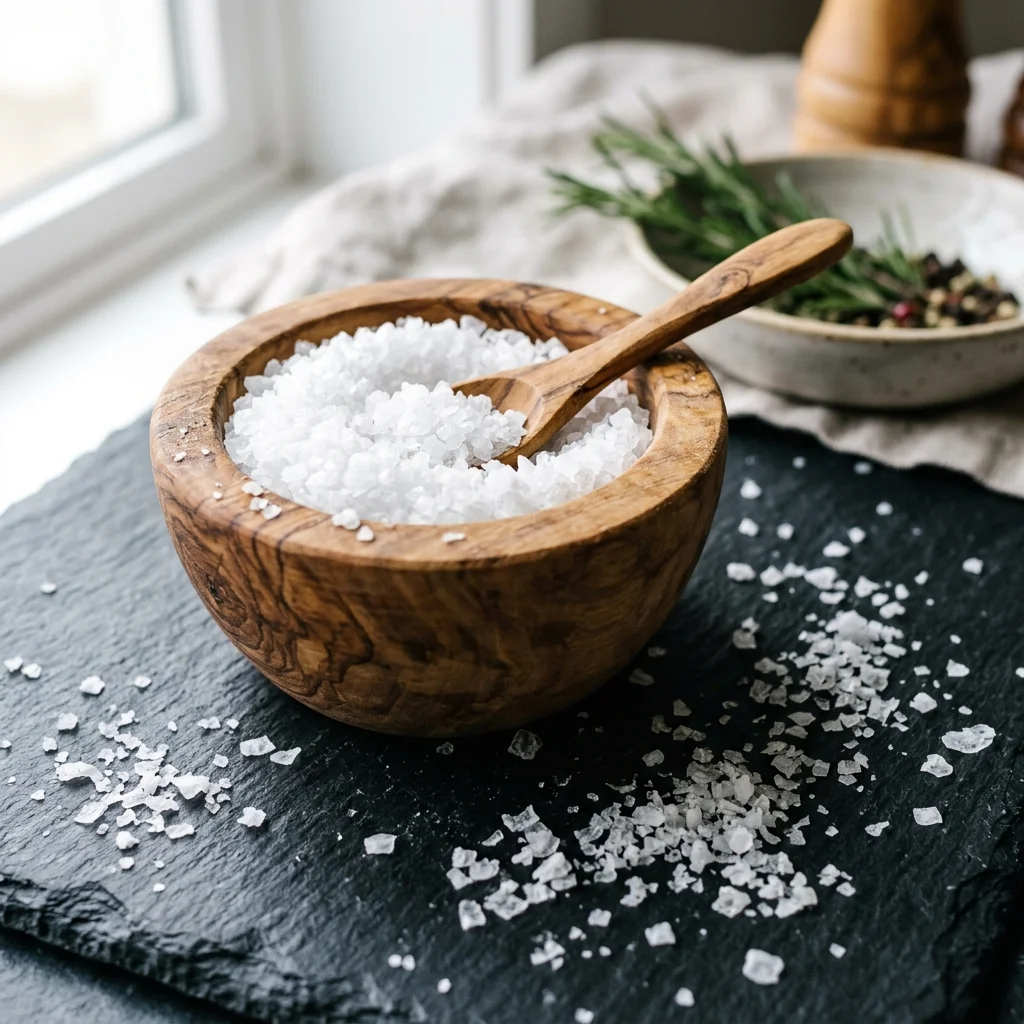
Sea Salt

Evaporated sea salt

Sea Salt is a variety of salt-forward seasoning, known for its mild flavor profile, and rich in essential nutrients like Trace vitamins, Sodium, Iron.

Regional names

Sea Salt

Origin

Sea Salt is cataloged inside the salt-forward seasonings lane of spices & seasonings.

Native region

Global temperate and subtropical zones

Season

Available year-round depending on form, preservation, or sourcing
Food Combinations & Timing

✅

Safe Combination Profile

It is safe to eat this food item with other food items.

Nutritional profile

Calories

23 kcal / 100 g

Protein

0.6 g

Carbs

4.6 g

Fat

0.1 g

Fiber

0.9 g

Water content

Low

Glycemic index

Negligible in culinary amounts

Vitamins

  • Trace vitamins

Minerals

  • Sodium
  • Iron
  • Trace minerals

Health benefits

Evidence-aligned highlights

  • Provides key macronutrients and micronutrients that support metabolic vitality.
  • Contributes essential dietary compounds that support tissue structure and recovery.
  • Ready for future custom nutritional mapping.

Flavor notes

Mild

Texture

Crisp

Aroma

Fresh

Pairings

Various flavor pairings

Safety & toxicity

Edible parts

Standard edible portions

Toxic or risky parts

Discard non-food-grade or spoiled forms

Raw vs cooked

Safe to consume according to culinary standards.

Allergies & intolerances

No common allergy warning.

Drug interactions

No major interactions for normal food amounts.

Safe daily limit

Enjoy as part of a balanced diet.

⚠️ Notice: This safety profile is a general guideline. Dietary tolerances differ; consult a healthcare professional for allergies or drug interactions. See our full disclaimer.

Who should avoid & how to handle it

Who should avoid or moderate

  • General population safe.

Preparation & storage

  • Clean: Wash or wipe clean according to the usual market form.
  • Cut: Slice, chop, or portion as needed for your recipe.
  • Cook: Prepared raw or cooked according to recipe preference.
  • Store: Keep in a cool, dry place or refrigerate.
  • Preserve: Freeze or dry for longer storage.

Cuisine & cultural use

Common cuisines

  • Global culinary use

Sea Salt appears in Global culinary use, often because its flavor structure and prep speed fit both everyday cooking and ceremonial dishes.

Dynamic Substitutions

No alternatives recorded for this specific item. It is chemically or botanically unique in the database.

🌱 Cultivation & Production

Sea Salt Home Growing Guide

Learn how to grow and cultivate sea salt at home, whether you live in an urban apartment or have access to outdoor garden land.

Apartment Friendly

✗ Not Ideal for Apartments

No

Urban Space Advice

Not recommended for apartments unless using specialized dwarf varieties in large, heavy pots.

Difficulty

Hard

Propagation

Grafting (commercial propagation) or seeds (slower growth).

Soil Type

Deep, well-draining garden soil

Watering

Deep watering once a week

Sunlight

Full sun (8+ hours daily)

Best Season

Spring planting; fruits in Summer/Autumn

Step-by-Step Growing Guide

  1. 1

    For garden planting: Choose a sunny spot with deep, fertile, well-draining soil.

  2. 2

    Dig a hole twice as wide as the root ball and plant at the same depth as the container.

  3. 3

    Water deeply once a week, especially during the first two years and during fruiting.

  4. 4

    Prune annually in late winter to remove dead wood and shape the tree for sun exposure.

Quick recipes

Fast recipes using Sea Salt

Snack

Crisp Lime & Chili Jicama Sticks

☆Sign in to save

Hydrating, crunchy Mexican jicama spears dusted with chili spice and fresh lime.

Ingredients

Servings:2
  • 1 medium jicama root, peeled and cut into sturdy French-fry style batons
  • 1 large juicy lime, halved
  • 1 tsp mild chili powder or Tajín seasoning
  • 1/4 tsp flaky sea salt

Nutrition

  • 55 kcal
  • 1 g protein
  • 13 g carbs
  • 0.2 g fat

Preparation Steps

  1. 1Peel the fibrous skin of the jicama root using a sharp knife and cut into crisp matchsticks.
  2. 2Arrange the jicama sticks on a serving platter.
  3. 3Squeeze fresh lime juice generously over the sticks.
  4. 4Dust evenly with chili powder and flaky sea salt, serving chilled for a crisp, hydrating snack.

Breakfast

Hearth-Baked Khorasan Wheat Sourdough Loaf

☆Sign in to save

Ancient Kamut Khorasan wheat artisan bread fermented with wild sourdough starter.

Ingredients

Servings:2
  • 400g Khorasan wheat flour (Kamut)
  • 280ml tepid water
  • 80g active sourdough starter
  • 8g fine sea salt

Nutrition

  • 180 kcal
  • 7 g protein
  • 36 g carbs
  • 1 g fat

Preparation Steps

  1. 1Mix Khorasan flour and water in a bowl; rest for 45 minutes for autolyse.
  2. 2Add active starter and sea salt; perform stretch-and-fold cycles every 30 minutes over 2.5 hours.
  3. 3Shape into a round boule and place in a proofing basket to ferment for 60 minutes.
  4. 4Preheat a Dutch oven to 230°C (450°F); score the loaf with a baker's blade.
  5. 5Bake covered for 25 minutes, then uncover for 15 minutes until crust is deep golden amber with a hollow tap.

Snack

Mediterranean Traditional Brined Lupin Beans

☆Sign in to save

Plump, high-protein yellow lupin beans boiled and steeped in sea salt brine.

Ingredients

Servings:2
  • 1 1/2 cups sweet lupin beans (Lupinus albus)
  • 6 cups water for boiling
  • 2 tbsp coarse sea salt for brine

Nutrition

  • 130 kcal
  • 13 g protein
  • 14 g carbs
  • 3 g fat

Preparation Steps

  1. 1Rinse sweet lupini beans thoroughly and place in a large pot with plenty of water.
  2. 2Bring to a boil, then reduce heat and simmer gently for 90 minutes until beans are tender.
  3. 3Drain the cooking water and submerge in a fresh brine made of 4 cups cold water and 2 tbsp sea salt.
  4. 4Let steep in the refrigerator; pop the yellow beans directly out of their skins with your fingers to eat as a savory bar snack.