BeetrootCeleriac
Plant-BasedVegetables
🟢Safe
Medically Reviewed

Clinical Quality Verification

Reviewed By: Dr. David Carter, PhD, CNS

Review Date: 2026-07-14

"Excellent source of carotenoids. Bioavailability of beta-carotene increases significantly when cooked with a healthy fat source (like olive oil or ghee)."

Carrot

Daucus carota

Facts

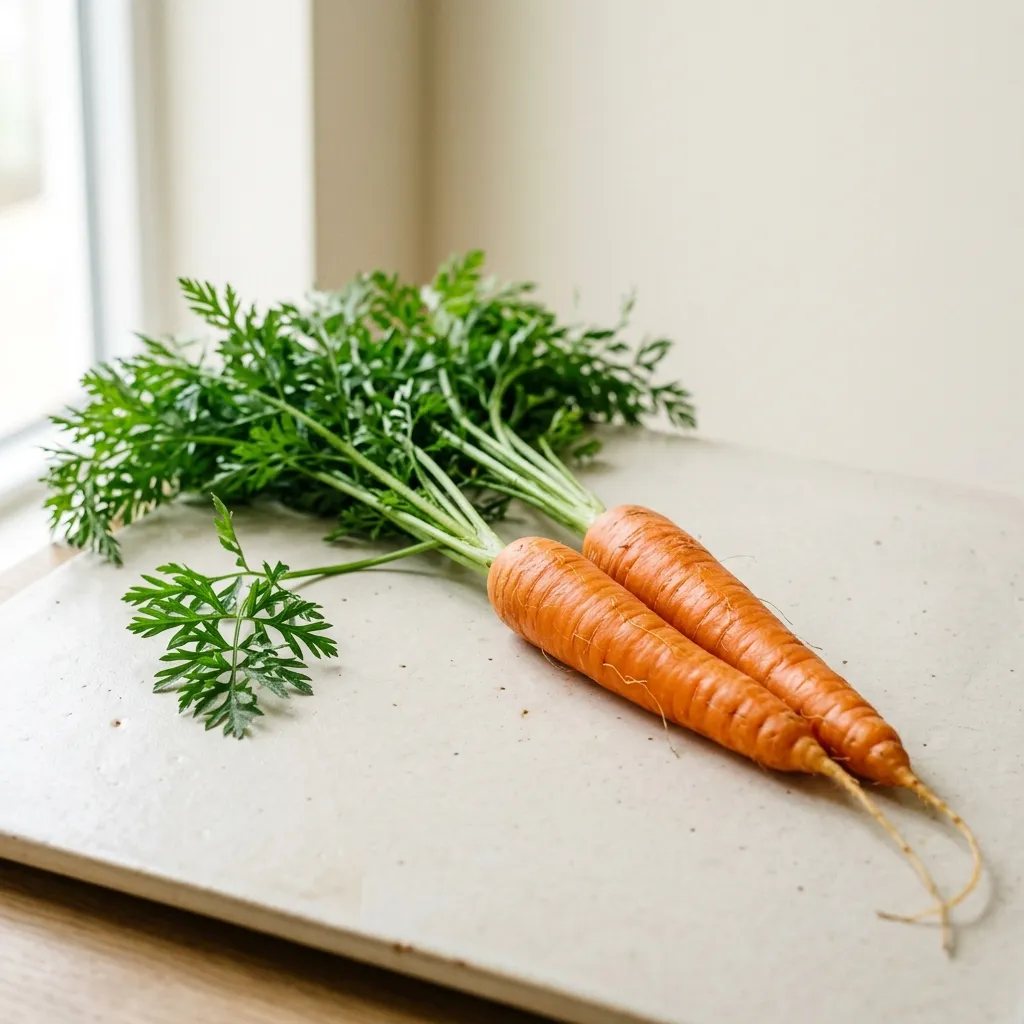
Carrot is a sweet, crunchy root vegetable, globally renowned for its high concentration of beta-carotene, which the human body converts into active Vitamin A.

Regional names

Gajar, Carotte, Zanahoria

Origin

Originating in Persia and Central Asia, originally cultivated for its aromatic leaves and seeds.

Native region

Central Asia and Middle East

Season

Available year-round, peak sweetness during winter harvests.
Food Combinations & Timing

Safe Combination Profile

It is safe to eat this food item with other food items.

Nutritional profile

Calories

41 kcal / 100 g

Protein

0.9 g

Carbs

9.6 g

Fat

0.2 g

Fiber

2.8 g

Water content

88%

Glycemic index

39

Vitamins

  • Vitamin A (Beta-carotene)
  • Vitamin C
  • Vitamin B6
  • Biotin

Minerals

  • Potassium
  • Manganese
  • Calcium

Health benefits

Evidence-aligned highlights

  • Excellent source of beta-carotene, supporting clear vision and eye health.
  • High carotenoid intake is linked to improved cardiovascular function and immune defense.
  • Dietary fiber and antioxidants promote digestive wellness and cellular protection.

Flavor notes

Sweet, Earthy, Crisp, Woody

Texture

Crunchy when raw, tender when cooked

Aroma

Sweet, fresh, and slightly rooty

Pairings

Ginger, Coriander, Ghee, Olive oil, Honey, Thyme

Safety & toxicity

Edible parts

Root (core and outer flesh), Edible leafy green tops

Toxic or risky parts

None; ensure thorough washing to remove soil residues

Raw vs cooked

Enjoyed raw for crunch or cooked (steaming/roasting) which increases beta-carotene bioavailability.

Allergies & intolerances

Carrot allergy is possible, often linked to birch pollen cross-reactivity.

Drug interactions

No major negative drug interactions identified in dietary amounts.

Safe daily limit

1 to 2 medium carrots daily provides over 100% of recommended Vitamin A needs.

⚠️ Notice: This safety profile is a general guideline. Dietary tolerances differ; consult a healthcare professional for allergies or drug interactions. See our full disclaimer.

Who should avoid & how to handle it

Who should avoid or moderate

  • Individuals with carrot-birch pollen syndrome should consume cooked carrots rather than raw.

Preparation & storage

  • Clean: Scrub the root thoroughly with a vegetable brush under cold water.
  • Cut: Peel optionally, then slice, dice, julienne, or grate according to culinary usage.
  • Cook: Steam, boil, roast with spices, sauté in stir-fries, or bake into cakes.
  • Store: Cut off green tops, place in a zip-top bag with a dry paper towel, and refrigerate for up to 3 weeks.
  • Preserve: Blanch sliced carrots for 2-3 minutes, freeze on a tray, and store in airtight freezer bags.

Cuisine & cultural use

Common cuisines

  • Global
  • French
  • Indian
  • Chinese
  • American

Carrot appears in Global, French, Indian, Chinese, American, often because its flavor structure and prep speed fit both everyday cooking and ceremonial dishes.

Dynamic Substitutions

Zucchini📉 Low Glycemic

Zucchini is much lower in carbs/sugars, making it a keto-friendly alternative in savory cooking.

Sweet Potato🔄 Culinary Swap

Sweet potatoes share a similar sweet, orange profile and high beta-carotene concentration.

🌱 Cultivation & Production

Carrot Home Growing Guide

Learn how to grow and cultivate carrot at home, whether you live in an urban apartment or have access to outdoor garden land.

Apartment Friendly

✓ Highly Recommended

Yes

Urban Space Advice

Can be grown successfully in deep grow bags (at least 12 inches deep) on balconies.

Difficulty

Medium

Propagation

Seeds

Soil Type

Loose, stone-free sandy soil to prevent root malformation

Watering

Consistent (moist soil promotes uniform roots and sweet flavor)

Sunlight

Full sun to partial shade (5-6 hours daily)

Best Season

Early Spring or early Autumn

Step-by-Step Growing Guide

  1. 1

    Choose a grow bag or container at least 12 inches deep with excellent drainage.

  2. 2

    Sow seeds directly (or plant sprouted potato chunks 4 inches deep).

  3. 3

    Keep the soil evenly moist and thin seedlings early to give them space to swell.

  4. 4

    Harvest when the root crowns emerge from the soil or the leaves begin to yellow.

Quick recipes

Fast recipes using Carrot

Dinner

Slow-Simmered Beef Brisket

Sign in to save

Tender beef brisket slow-cooked on the stovetop with carrots, garlic, and rich broth.

Ingredients

Servings:2
  • 500g beef brisket, cut into chunks
  • 2 large carrots, chopped
  • 4 cloves garlic, crushed
  • 1 large onion, chopped
  • 3 cups beef broth
  • 2 tbsp vegetable oil
  • Salt and pepper to taste

Nutrition

  • 510 kcal
  • 42 g protein
  • 8 g carbs
  • 34 g fat

Preparation Steps

  1. 1Season beef brisket chunks with salt and pepper. Heat oil in a large heavy pot and sear beef until browned on all sides. Remove beef.
  2. 2Add chopped onion and crushed garlic to the pot, sautéing for 3 minutes.
  3. 3Return beef to the pot, add chopped carrots, and pour in beef broth.
  4. 4Bring to a boil, then cover and simmer on low heat for 1.5 hours until the beef is meltingly tender. Adjust seasoning and serve.

Dinner

Lamb Shank Stew

Sign in to save

Tender lamb shanks slow-simmered in a rich garlic and vegetable broth.

Ingredients

Servings:2
  • 2 lamb shanks
  • 1 large onion, chopped
  • 4 cloves garlic, minced
  • 2 carrots, sliced
  • 3 cups beef or vegetable broth
  • 2 tbsp olive oil
  • Salt and rosemary to taste

Nutrition

  • 560 kcal
  • 44 g protein
  • 10 g carbs
  • 38 g fat

Preparation Steps

  1. 1Season shanks with salt and pepper. Heat oil in a heavy pot and sear shanks for 5 minutes per side. Remove shanks.
  2. 2Sauté chopped onion, minced garlic, and sliced carrots in the pot for 4 minutes.
  3. 3Return shanks, pour in broth, and add rosemary. Bring to a boil.
  4. 4Reduce heat to low, cover, and simmer for 1.5 hours until meat is tender and pulling away from the bone.