
Duck EggGoose Egg
Animal-BasedEggs
🟡Caution

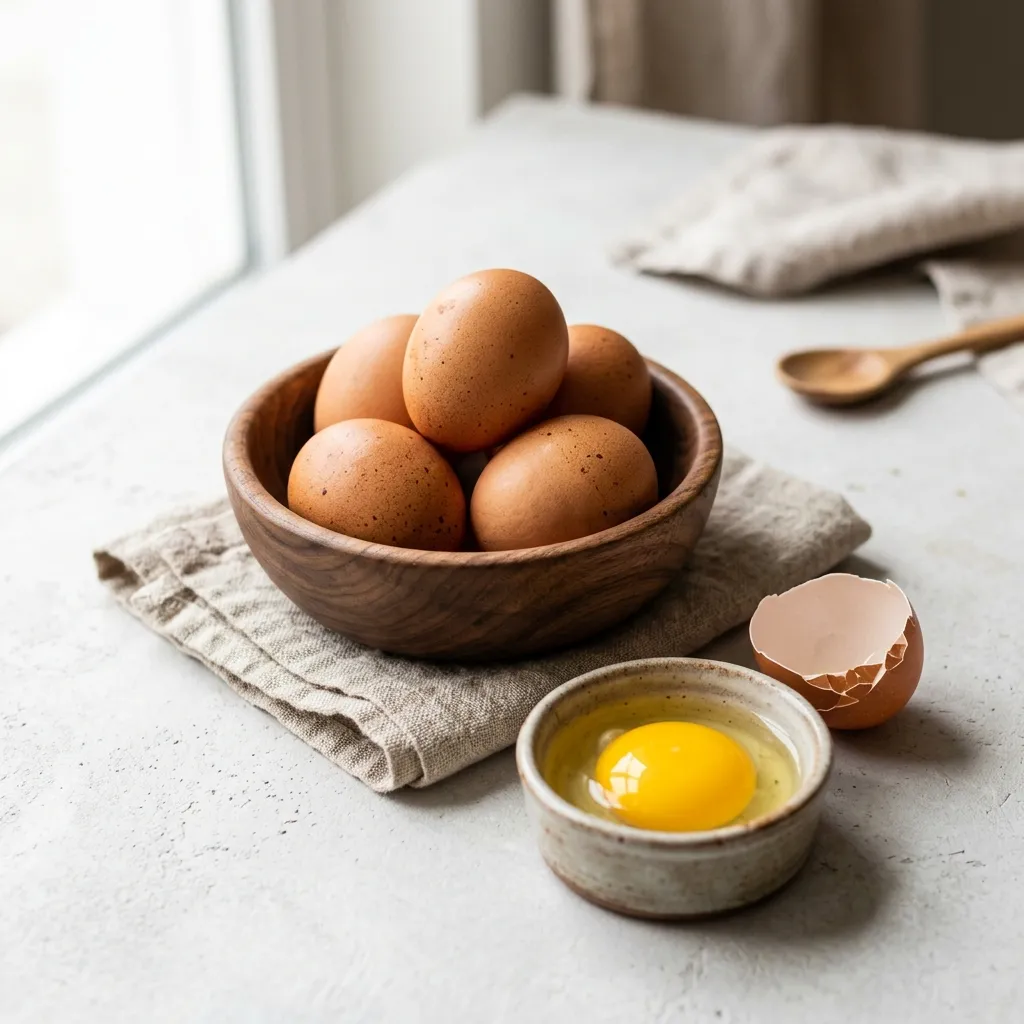
Egg

Gallus gallus domesticus (chicken egg)

Facts

Eggs are one of the most functional foods in cooking, shifting easily between gentle, crisp, creamy, and airy textures.

Regional names

Hen egg

Origin

Universally used animal ingredient across baking, breakfast, sauces, and protein-forward meals.

Native region

Domesticated globally from junglefowl ancestry

Season

Year-round
Food Combinations & Timing

Safe Combination Profile

It is safe to eat this food item with other food items.

Nutritional profile

Calories

72 kcal / 100 g

Protein

6.3 g

Carbs

0.4 g

Fat

4.8 g

Fiber

0 g

Water content

76%

Glycemic index

0

Vitamins

  • Vitamin B12
  • Vitamin D
  • Choline

Minerals

  • Selenium
  • Phosphorus

Health benefits

Evidence-aligned highlights

  • Complete protein in a compact serving.
  • Rich in choline, important for cell membranes and brain development.
  • Highly versatile for appetite and texture management.

Flavor notes

Savory, Rich, Mild

Texture

Varies from silky to firm depending on method

Aroma

Gentle sulfur note when cooked

Pairings

Kale, Nori, Toast, Cheese, Herbs

Safety & toxicity

Edible parts

Whole cooked egg

Toxic or risky parts

Raw shell fragments are a contamination hazard

Raw vs cooked

Cook until whites and yolks reach the desired safety level; avoid raw eggs for high-risk groups unless pasteurized.

Allergies & intolerances

Egg allergy is common in children.

Drug interactions

No major interactions for usual intake.

Safe daily limit

Many adults can include eggs regularly depending on total diet and clinician advice.

⚠️ Notice: This safety profile is a general guideline. Dietary tolerances differ; consult a healthcare professional for allergies or drug interactions. See our full disclaimer.

Who should avoid & how to handle it

Who should avoid or moderate

  • People with egg allergy should avoid.
  • Pregnant people, young children, and older adults should avoid raw preparations unless pasteurized.

Preparation & storage

  • Clean: Use clean hands and keep shells away from ready-to-eat foods.
  • Cut: Crack on a flat surface to reduce shell fragments.
  • Cook: Scramble, boil, poach, fry, steam, or microwave carefully.
  • Store: Refrigerate in the carton.
  • Preserve: Hard-boil for short-term meal prep.

Cuisine & cultural use

Common cuisines

  • Global
  • French
  • Japanese
  • Turkish

Egg appears in Global, French, Japanese, Turkish, often because its flavor structure and prep speed fit both everyday cooking and ceremonial dishes.

Dynamic Substitutions

No alternatives recorded for this specific item. It is chemically or botanically unique in the database.

🌱 Cultivation & Production

Egg Production Profile

Discover how egg is obtained, produced, and how you can craft or prepare it in your own kitchen.

Apartment Friendly

✗ Not Ideal for Apartments

No

Urban Space Advice

Cannot be grown or raised in a standard residential apartment. Requires livestock farming or professional marine harvesting.

Source Material

Poultry farms (laying hens, ducks, or quail)

Primary Method

Poultry husbandry and egg collection

Homemade Production Method

  1. 1

    Store fresh eggs in their original carton in the main body of the refrigerator (not the door) at 40°F (4°C) or below.

  2. 2

    Use eggs within 3 to 5 weeks from the purchase date to ensure maximum quality and safety.

  3. 3

    To check freshness: Place an egg in a bowl of water. Fresh eggs sink to the bottom, while spoiled eggs float due to the expanded air cell.

Quick recipes

Fast recipes using Egg

Breakfast

Kale Egg Scramble

Sign in to save

Fast stovetop breakfast with greens, eggs, and garlic.

Ingredients

Servings:2
  • 2 eggs
  • 1 cup chopped kale
  • 1 tsp olive oil
  • 1 minced garlic clove
  • Salt and pepper

Nutrition

  • 210 kcal
  • 14 g protein
  • 4 g carbs
  • 15 g fat

Preparation Steps

  1. 1Saute garlic and kale in oil until softened.
  2. 2Whisk eggs with salt and pepper.
  3. 3Pour in eggs and fold gently until just set.

Lunch

Nori Egg Rice Wrap

Sign in to save

Microwave-friendly leftover-rice wrap for fast lunches.

Ingredients

Servings:2
  • 2 nori sheets
  • 1 cup cooked rice
  • 2 cooked eggs
  • 1 tsp sesame oil
  • Soy sauce

Nutrition

  • 340 kcal
  • 13 g protein
  • 41 g carbs
  • 13 g fat

Preparation Steps

  1. 1Warm rice and slice eggs.
  2. 2Season rice with sesame oil.
  3. 3Wrap rice and egg in nori sheets.

Snack

Jammy Eggs on Toast

Sign in to save

Soft eggs and crunchy toast for a fast protein snack.

Ingredients

Servings:2
  • 2 eggs
  • 2 toast slices
  • 1 tsp butter
  • Salt and pepper

Nutrition

  • 250 kcal
  • 13 g protein
  • 18 g carbs
  • 13 g fat

Preparation Steps

  1. 1Boil eggs for 7 minutes and cool briefly.
  2. 2Butter toast.
  3. 3Halve eggs over toast and season.