
AonoriNori Flakes
Plant-BasedSeaweeds & Algae
🟡Caution

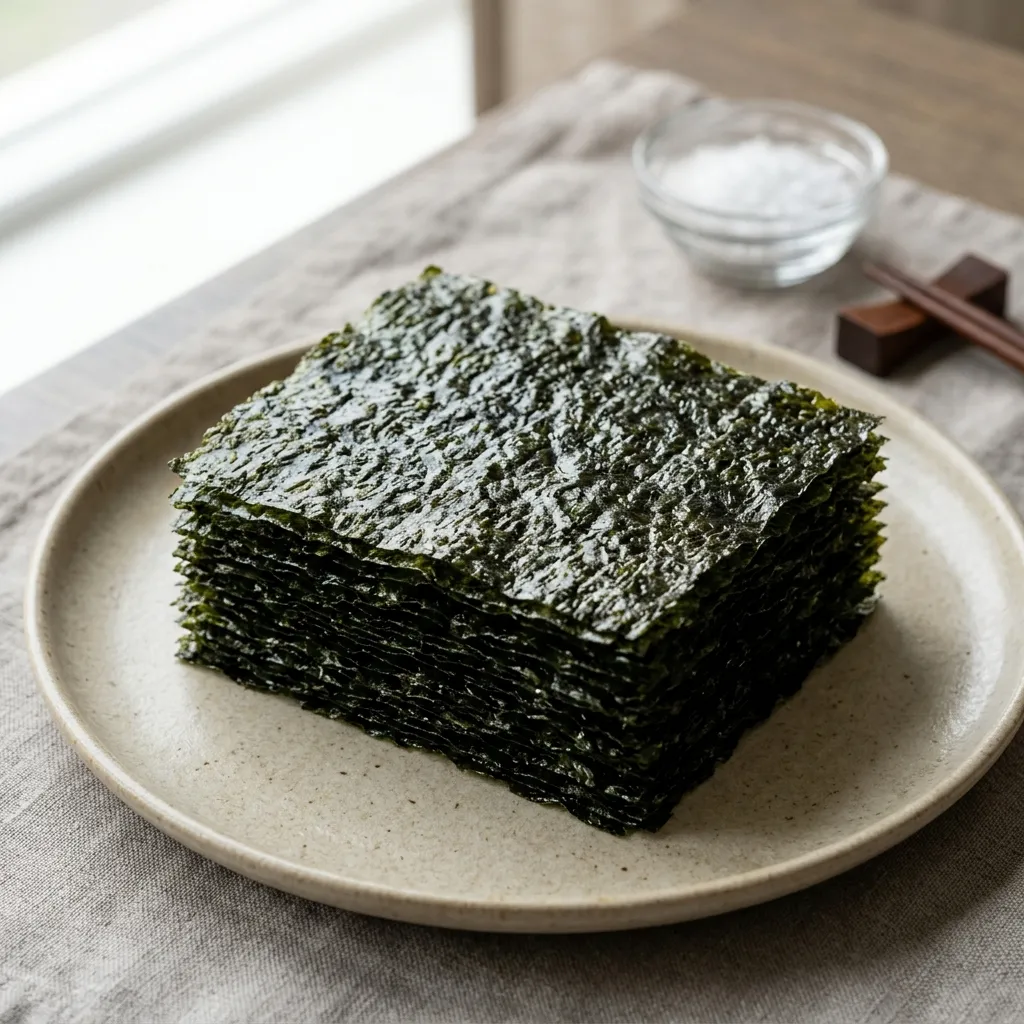
Nori

Pyropia yezoensis

Facts

Nori delivers marine aroma, iodine, and quick assembly value for wraps, snacks, and rice dishes.

Regional names

Laver, Gim

Origin

Pressed seaweed sheets made from red algae used widely in East Asian cooking.

Native region

Coastal Japan and Korea

Season

Aquaculture harvest varies by coast; dried sheets are available year-round
Food Combinations & Timing

Safe Combination Profile

It is safe to eat this food item with other food items.

Nutritional profile

Calories

35 kcal / 100 g

Protein

5.8 g

Carbs

5.1 g

Fat

0.3 g

Fiber

0.3 g

Water content

Very low when dried

Glycemic index

Negligible

Vitamins

  • Vitamin A
  • Vitamin C
  • Vitamin B12 analog compounds

Minerals

  • Iodine
  • Iron
  • Magnesium

Health benefits

Evidence-aligned highlights

  • Adds iodine, which supports thyroid hormone production.
  • Contributes trace minerals and savory depth without much energy.
  • Can help make vegetable-forward snacks more appealing.

Flavor notes

Briny, Toasty, Umami

Texture

Crisp when dry, silky when moistened

Aroma

Marine and roasted

Pairings

Rice, Salmon, Eggs, Sesame, Avocado

Safety & toxicity

Edible parts

Dried seaweed sheets

Toxic or risky parts

No standard toxic parts when sourced from food-grade producers

Raw vs cooked

Ready to eat toasted or dry; can also be softened with steam or liquid.

Allergies & intolerances

Rare seaweed allergy.

Drug interactions

High iodine intake may complicate thyroid disease management.

Safe daily limit

Keep servings moderate if you already use iodized salt or thyroid medication.

⚠️ Notice: This safety profile is a general guideline. Dietary tolerances differ; consult a healthcare professional for allergies or drug interactions. See our full disclaimer.

Who should avoid & how to handle it

Who should avoid or moderate

  • People with thyroid disorders should monitor iodine intake.

Preparation & storage

  • Clean: Use straight from package if food grade.
  • Cut: Slice with dry scissors or fold and tear.
  • Cook: Toast briefly over low heat for extra crispness.
  • Store: Keep airtight and dry to prevent softening.
  • Preserve: Store with desiccant in original package until opened.

Cuisine & cultural use

Common cuisines

  • Japanese
  • Korean
  • Hawaiian-inspired

Nori appears in Japanese, Korean, Hawaiian-inspired, often because its flavor structure and prep speed fit both everyday cooking and ceremonial dishes.

Dynamic Substitutions

No alternatives recorded for this specific item. It is chemically or botanically unique in the database.

🌱 Cultivation & Production

Nori Home Growing Guide

Learn how to grow and cultivate nori at home, whether you live in an urban apartment or have access to outdoor garden land.

Apartment Friendly

✗ Not Ideal for Apartments

No

Urban Space Advice

Not recommended for apartments unless using specialized dwarf varieties in large, heavy pots.

Difficulty

Hard

Propagation

Grafting (commercial propagation) or seeds (slower growth).

Soil Type

Deep, well-draining garden soil

Watering

Deep watering once a week

Sunlight

Full sun (8+ hours daily)

Best Season

Spring planting; fruits in Summer/Autumn

Step-by-Step Growing Guide

  1. 1

    For garden planting: Choose a sunny spot with deep, fertile, well-draining soil.

  2. 2

    Dig a hole twice as wide as the root ball and plant at the same depth as the container.

  3. 3

    Water deeply once a week, especially during the first two years and during fruiting.

  4. 4

    Prune annually in late winter to remove dead wood and shape the tree for sun exposure.

Quick recipes

Fast recipes using Nori

Lunch

Nori Salmon Hand Rolls

Sign in to save

A five-ingredient hand roll that works with cooked leftover salmon.

Ingredients

Servings:2
  • 2 nori sheets
  • 1 cup cooked rice
  • 100 g cooked salmon
  • Sliced cucumber
  • Soy sauce

Nutrition

  • 320 kcal
  • 18 g protein
  • 38 g carbs
  • 9 g fat

Preparation Steps

  1. 1Lay out nori and spread a strip of rice.
  2. 2Add salmon and cucumber.
  3. 3Roll by hand and dip lightly in soy sauce.

Lunch

Nori Egg Rice Wrap

Sign in to save

Microwave-friendly leftover-rice wrap for fast lunches.

Ingredients

Servings:2
  • 2 nori sheets
  • 1 cup cooked rice
  • 2 cooked eggs
  • 1 tsp sesame oil
  • Soy sauce

Nutrition

  • 340 kcal
  • 13 g protein
  • 41 g carbs
  • 13 g fat

Preparation Steps

  1. 1Warm rice and slice eggs.
  2. 2Season rice with sesame oil.
  3. 3Wrap rice and egg in nori sheets.

Dinner

Nori Avocado Rice Bowl

Sign in to save

Warm brown rice seasoned with nori strips, sliced avocado, and a splash of soy sauce.

Ingredients

Servings:2
  • 1 cup cooked brown rice or quinoa
  • 1/2 avocado, sliced
  • 1 sheet nori, shredded
  • 1 tbsp soy sauce
  • 1 tsp toasted sesame seeds

Nutrition

  • 310 kcal
  • 6 g protein
  • 42 g carbs
  • 14 g fat

Preparation Steps

  1. 1Place warm rice or quinoa in a serving bowl.
  2. 2Arrange the sliced avocado on top.
  3. 3Scatter the shredded nori strips and sesame seeds over the bowl.
  4. 4Drizzle with soy sauce and serve warm.