←Pearl OnionScallion→
Plant-BasedVegetables
🟢Safe

Red Onion

Allium cepa 'Red'

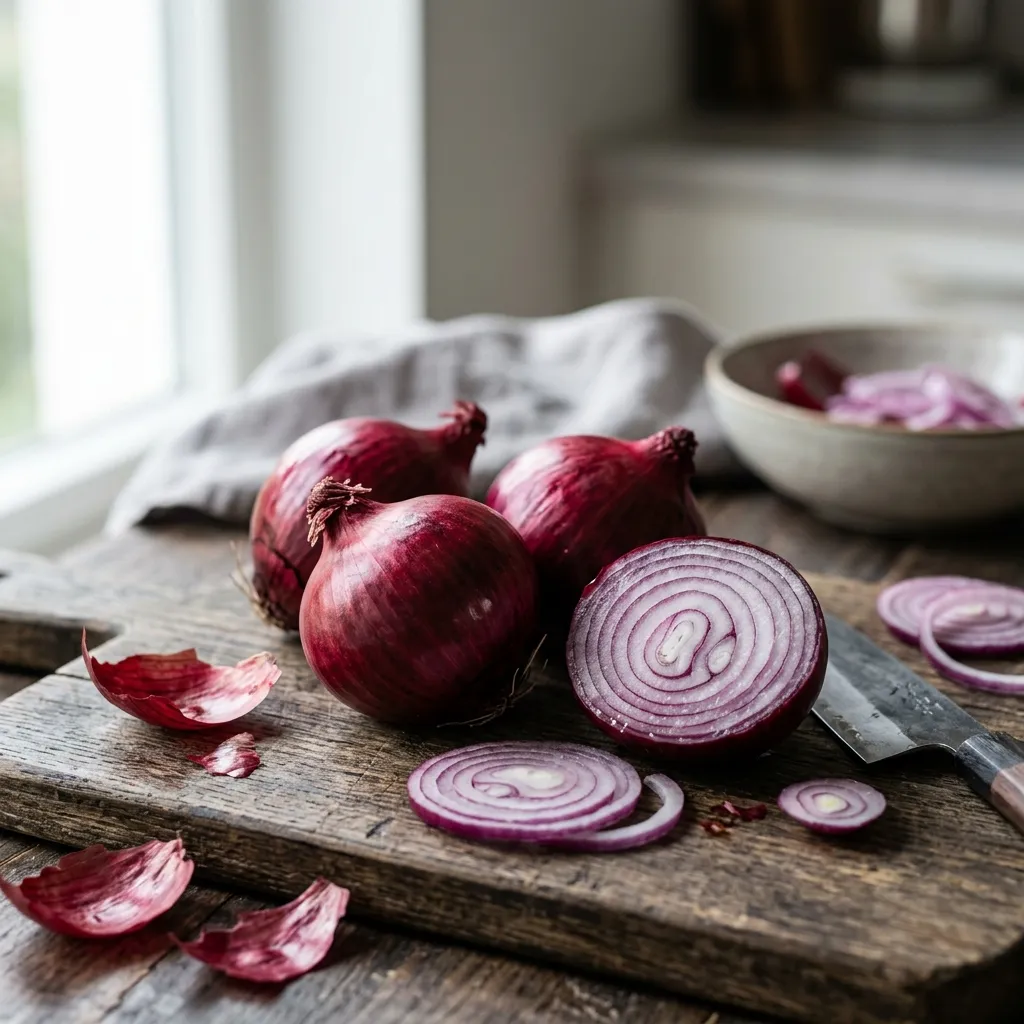
Red Onion is an aromatic allium vegetable, fundamental to global flavor building due to its rich organosulfur compounds and pungent aroma.

Regional names

Red Onion

Origin

Red Onion has been bred globally for crop density, edible leaves, roots, and pods, anchoring agriculture across continents.

Native region

Central Asia and the Mediterranean basin

Season

Highly seasonal by crop, with some year-round supply
Food Combinations & Timing

✅

Safe Combination Profile

It is safe to eat this food item with other food items.

Nutritional profile

Calories

48 kcal / 100 g

Protein

1.6 g

Carbs

10.6 g

Fat

0.1 g

Fiber

1.9 g

Water content

High (85% to 95%)

Glycemic index

Low

Vitamins

  • Vitamin C
  • Vitamin K
  • Vitamin A

Minerals

  • Potassium
  • Folate
  • Calcium

Health benefits

Evidence-aligned highlights

  • Contains allicin and other sulfur compounds with strong antimicrobial and blood-pressure-lowering activity.
  • Supplies prebiotic inulin fiber to feed beneficial Bifidobacteria in the colon.
  • Rich in quercetin, a flavonoid antioxidant with antihistamine and anti-inflammatory action.

Flavor notes

Pungent, Sharp, Sweet when cooked, Umami-building

Texture

Crisp and juicy raw, soft and melting when cooked

Aroma

Strong, sulfurous, and savory

Pairings

Tomato, Olive oil, Ginger, Soy sauce, Butter, Beef, Chicken, Herbs

Safety & toxicity

Edible parts

Bulbs, Cloves, Green shoots (of scallions and chives)

Toxic or risky parts

Papery dry skins (peel off and discard)

Raw vs cooked

Eaten raw for maximum sharpness and allicin, or cooked to develop sweet, caramelized flavors.

Allergies & intolerances

Can trigger contact allergy or gastrointestinal sensitivity in some people.

Drug interactions

Extremely large therapeutic doses (like garlic extracts) can thin blood; standard food use is safe.

Safe daily limit

Use freely as a primary aromatic seasoning base.

⚠️ Notice: This safety profile is a general guideline. Dietary tolerances differ; consult a healthcare professional for allergies or drug interactions. See our full disclaimer.

Who should avoid & how to handle it

Who should avoid or moderate

  • Individuals with severe IBS or fructose/FODMAP sensitivity may moderate raw allium intake to avoid gas.

Preparation & storage

  • Clean: Peel the papery skin away, trim root ends, and rinse if dirty.
  • Cut: Mince finely to release allicin, slice into rings, or chop coarsely.
  • Cook: Sweat in butter/oil over medium heat to soften, or roast whole bulbs for sweet paste.
  • Store: Store whole dry bulbs in a cool, dark, well-ventilated dry space; do not store in plastic bags.
  • Preserve: Mince and freeze in oil, dehydrate slices, or pickle.

Cuisine & cultural use

Common cuisines

  • Global savory cooking
  • Soups, stews, and roasted sides

Red Onion appears in Global savory cooking, Soups, stews, and roasted sides, often because its flavor structure and prep speed fit both everyday cooking and ceremonial dishes.

Dynamic Substitutions

No alternatives recorded for this specific item. It is chemically or botanically unique in the database.

🌱 Cultivation & Production

Red Onion Home Growing Guide

Learn how to grow and cultivate red onion at home, whether you live in an urban apartment or have access to outdoor garden land.

Apartment Friendly

✓ Highly Recommended

Yes

Urban Space Advice

Very easy to grow in medium pots (8-10 inches deep) on balconies or sunny windowsills.

Difficulty

Easy

Propagation

Seeds or bulb sets

Soil Type

Light, sandy-loam soil with organic compost

Watering

Moderate (allow soil to dry slightly between waterings)

Sunlight

Full sun (6 hours daily)

Best Season

Early Spring planting

Step-by-Step Growing Guide

  1. 1

    Select a healthy bulb or rhizome segment showing active green buds or eyes.

  2. 2

    Plant in a pot (at least 8 inches deep) about 2 inches deep with buds pointing upward.

  3. 3

    Place in a sunny location and water moderately to prevent rot.

  4. 4

    Harvest green shoots periodically, or wait for leaves to dry and turn brown to dig up mature bulbs.

Quick recipes

Fast recipes using Red Onion

Lunch

Quick Citrus Nopales Salad

☆Sign in to save

Tender prickly pear cactus paddles tossed with fresh lime juice, red onions, and fresh cilantro.

Ingredients

Servings:2
  • 2 medium fresh nopales paddles, cleaned and diced into small cubes
  • 1 tbsp extra virgin olive oil
  • 1/4 cup finely diced red onion
  • 2 tbsp freshly squeezed lime juice
  • 1/4 cup chopped fresh cilantro
  • 1/4 tsp sea salt

Nutrition

  • 85 kcal
  • 2 g protein
  • 8 g carbs
  • 5 g fat

Preparation Steps

  1. 1Sauté the diced nopales in olive oil over medium-high heat for 6-8 minutes until tender and juices evaporate.
  2. 2Transfer to a bowl and let cool slightly for 3 minutes.
  3. 3Toss with diced red onion, fresh lime juice, chopped cilantro, and sea salt.
  4. 4Serve warm or chilled as a refreshing, nutrient-dense Mexican salad.